


Brake Bleeder Kits
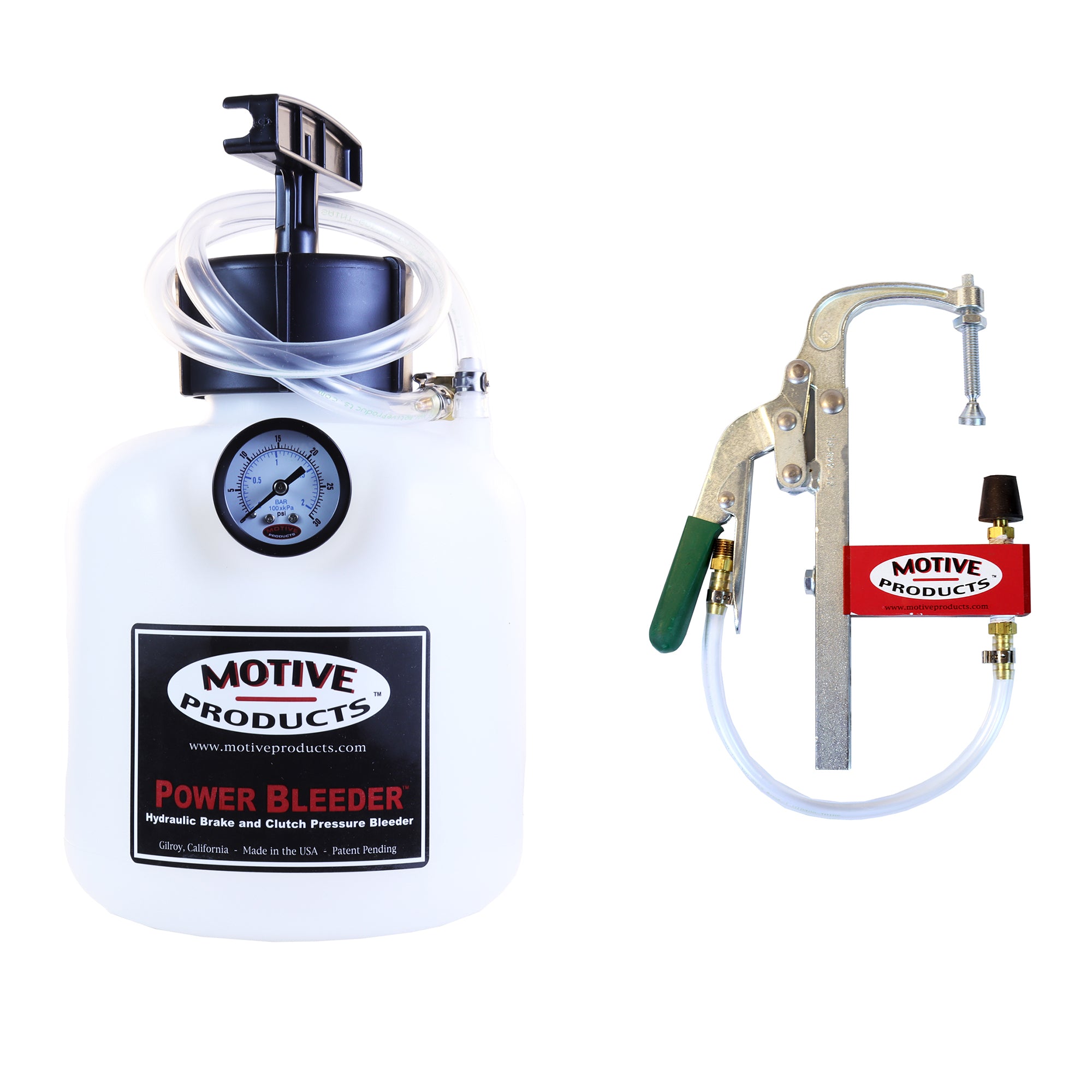
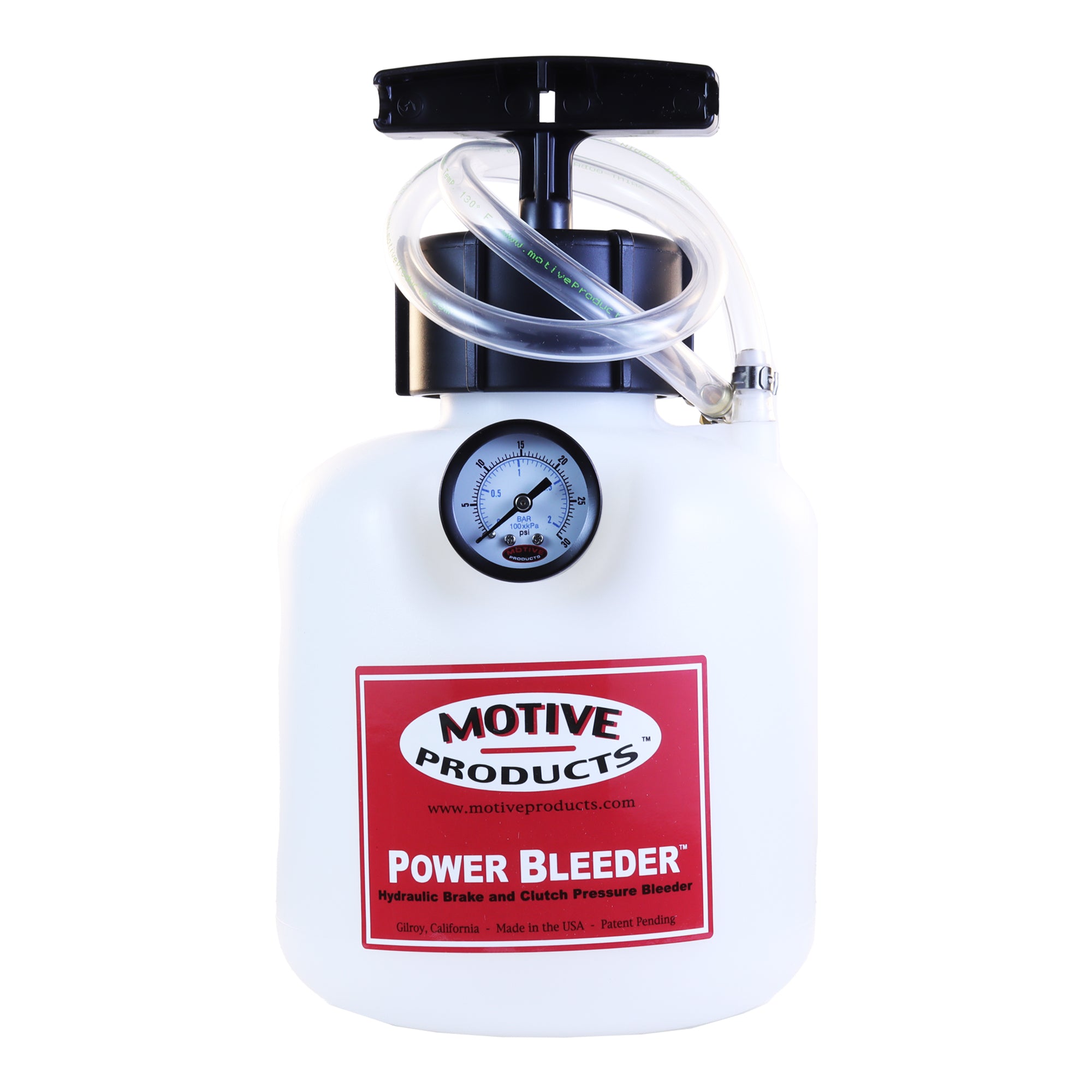
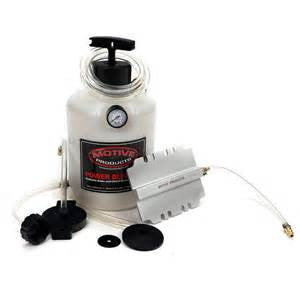
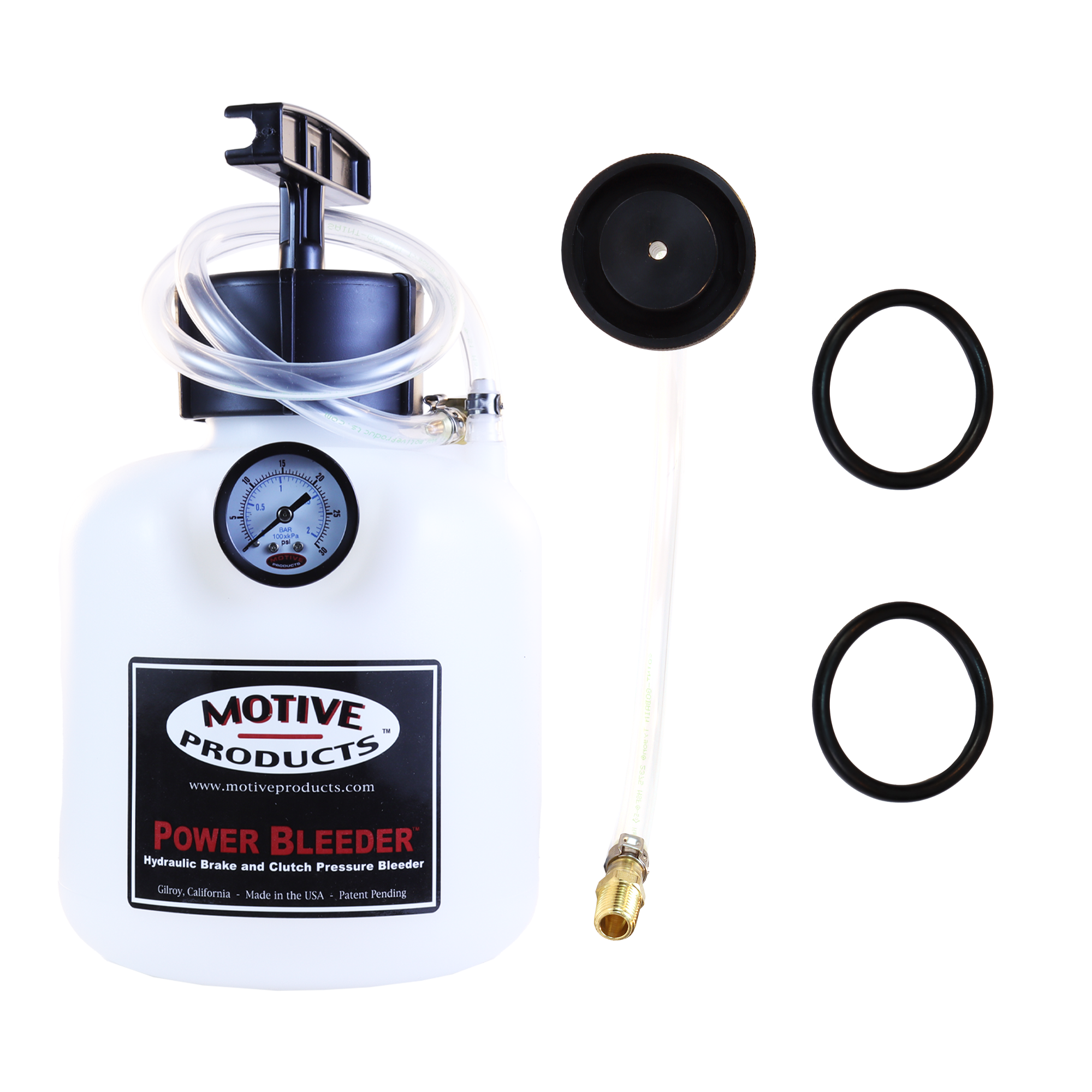
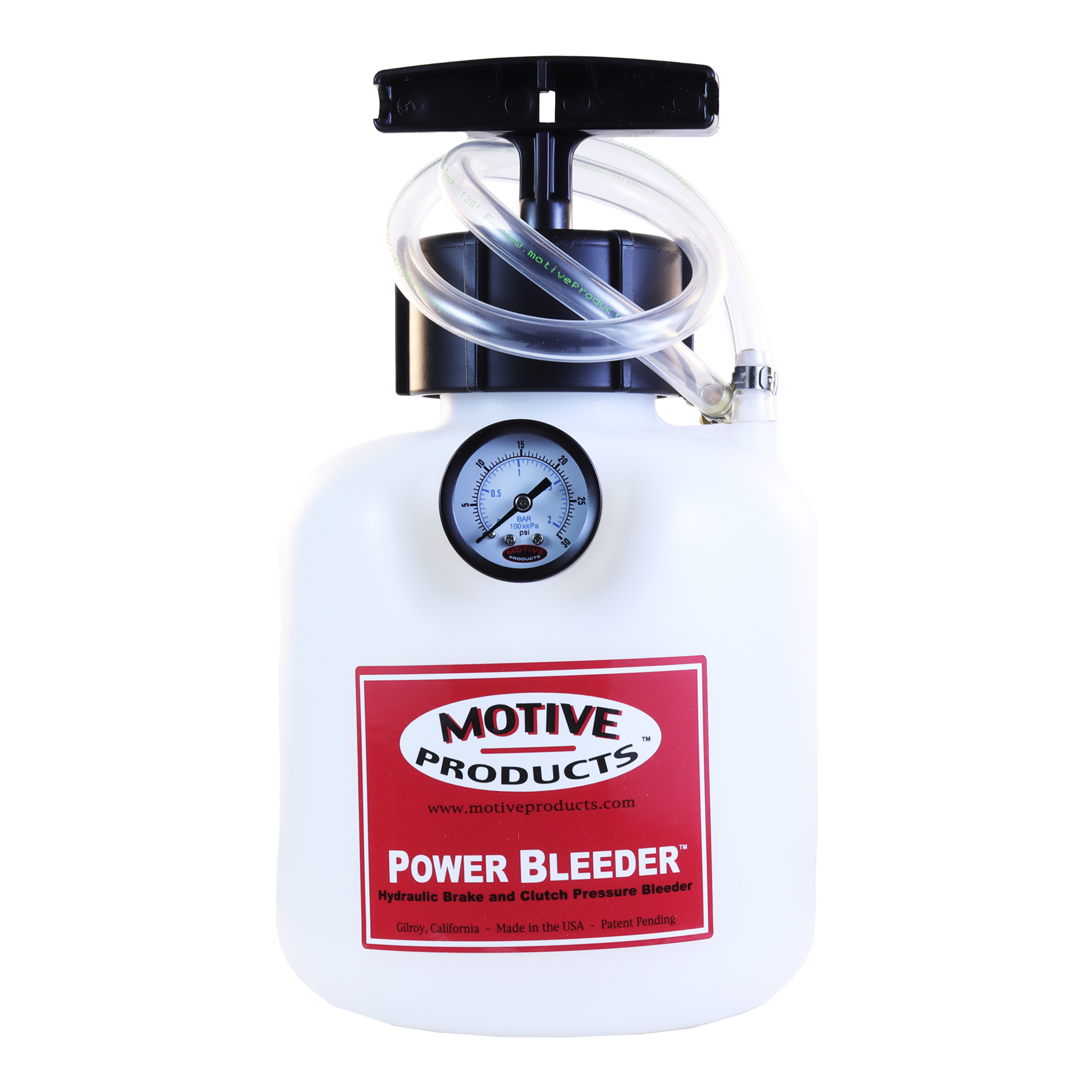
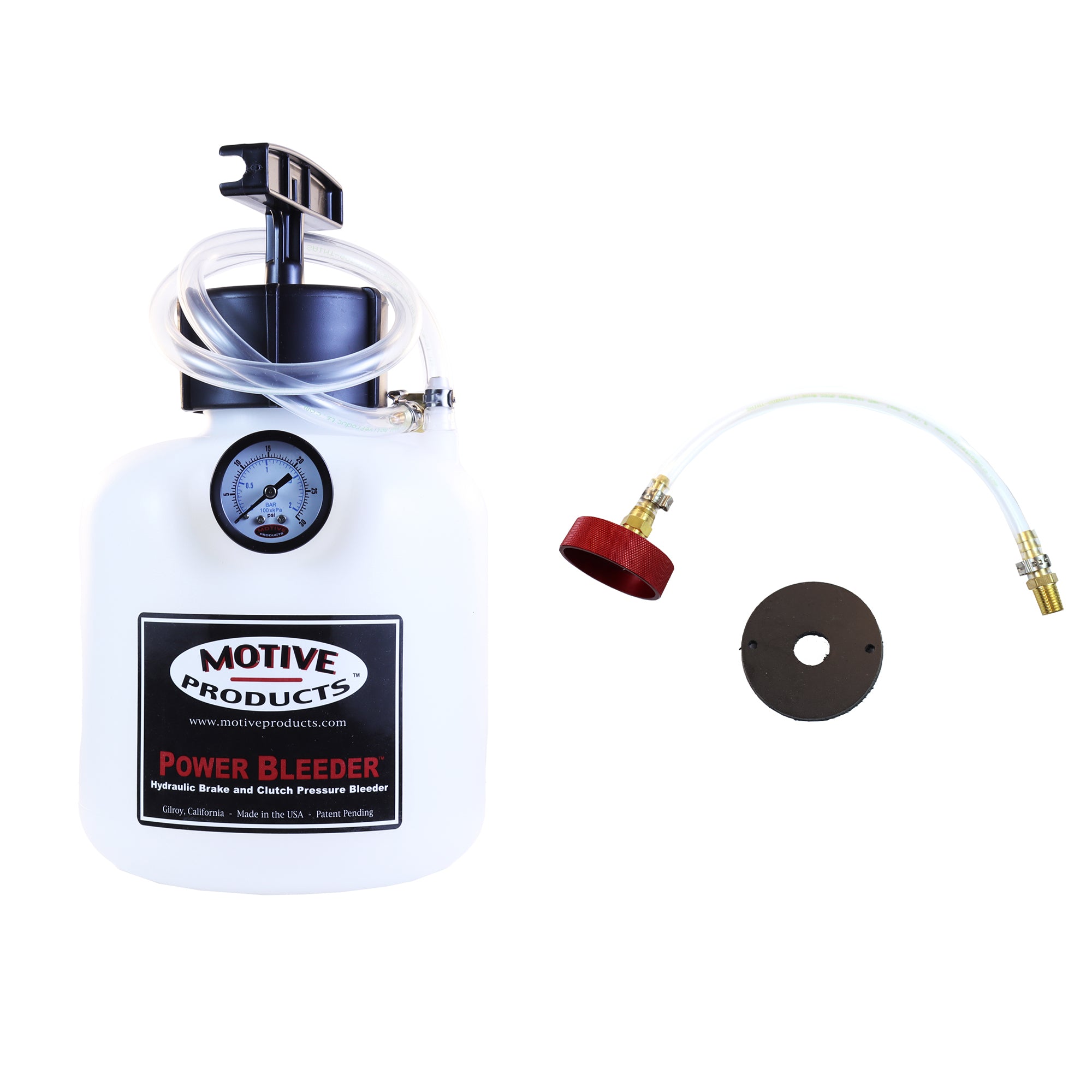
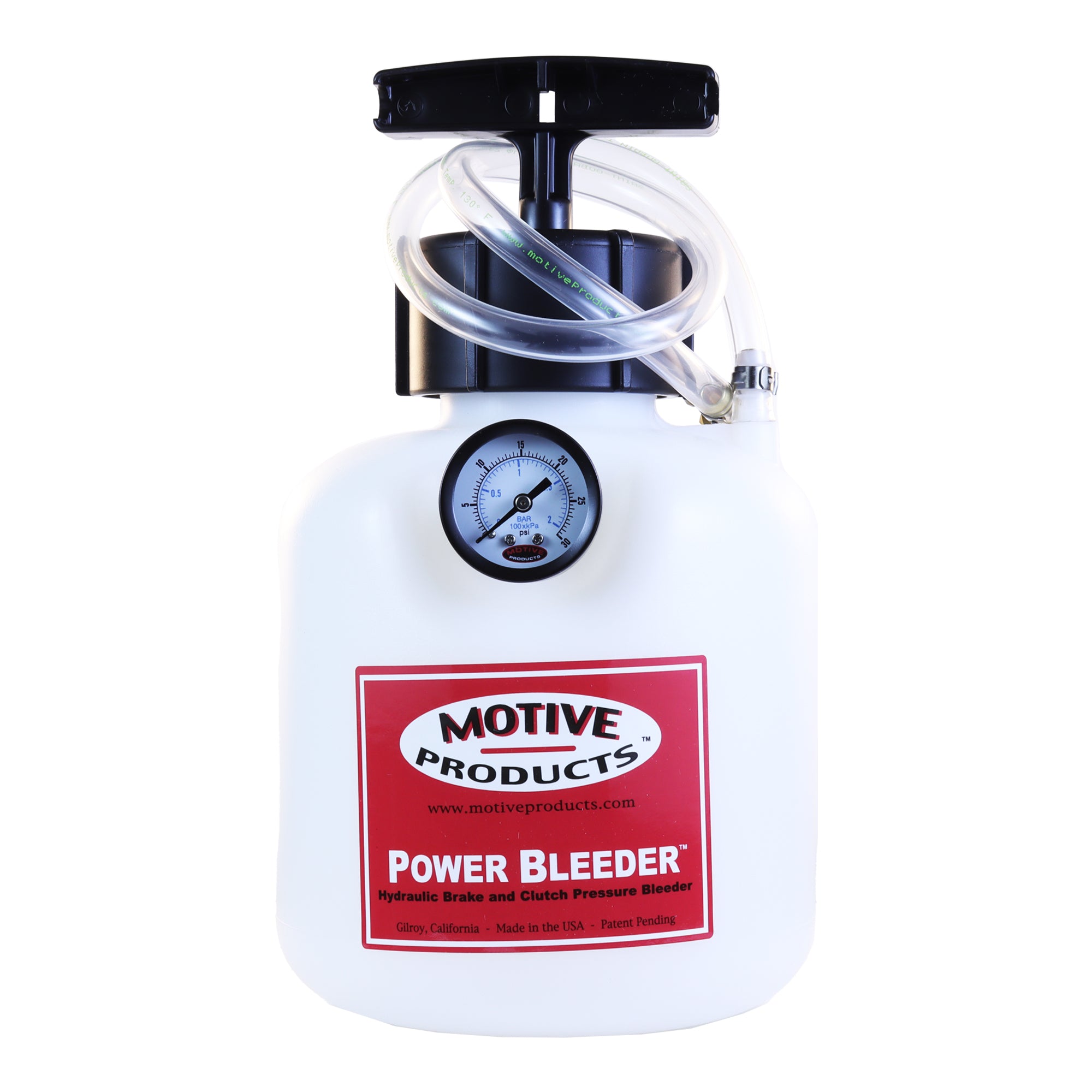
Motive Products brake bleeder kits let one person flush old brake fluid and bleed the entire hydraulic system in minutes — no helper pumping the pedal, no compressed air, no mess. Motive invented the original one-person pressure bleeder — the Power Bleeder® — in 1998, and every kit is still built on the same proven design: a corrosion-proof pressure tank, an integrated hand pump with gauge, and a precision-machined adapter that seals directly to your master-cylinder reservoir.

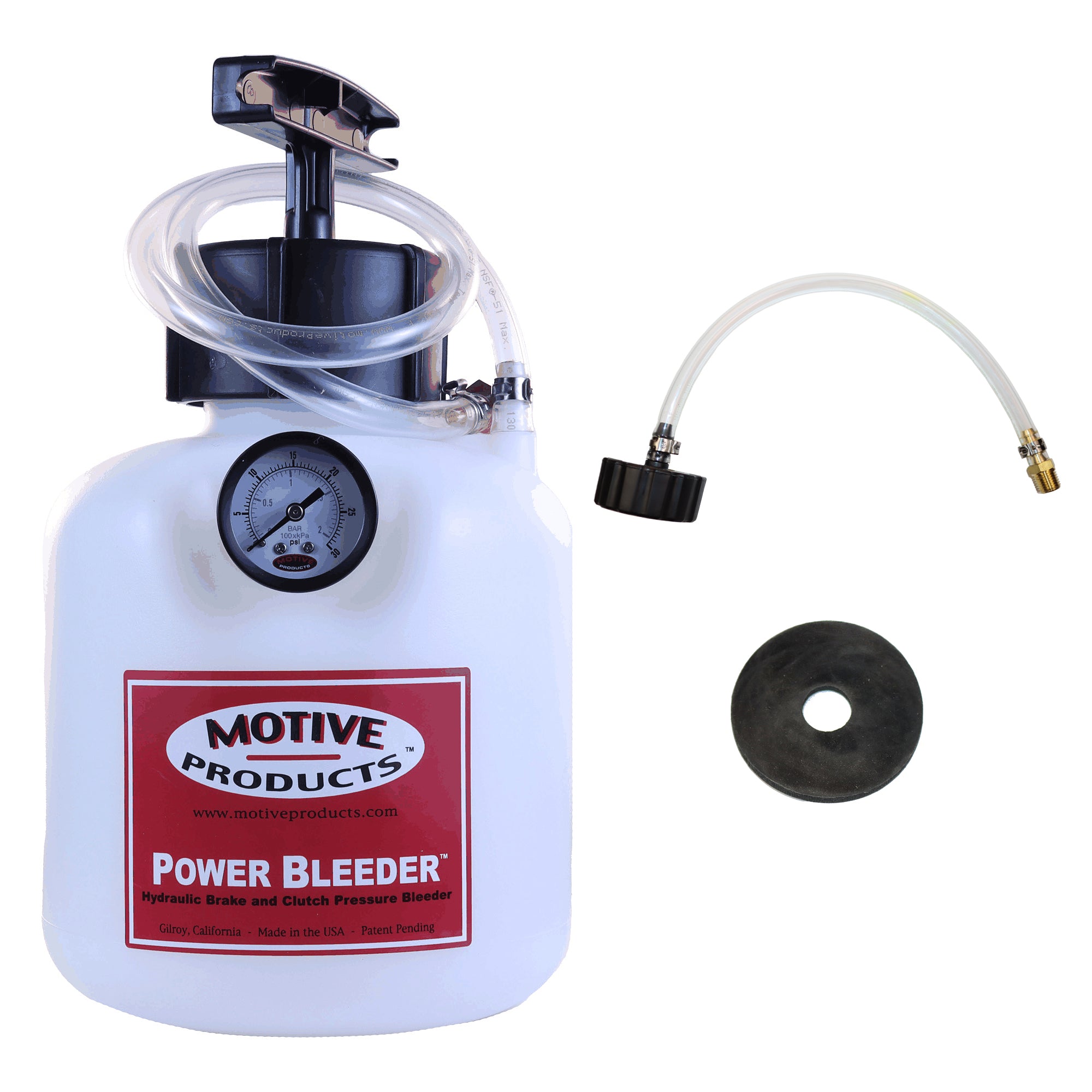

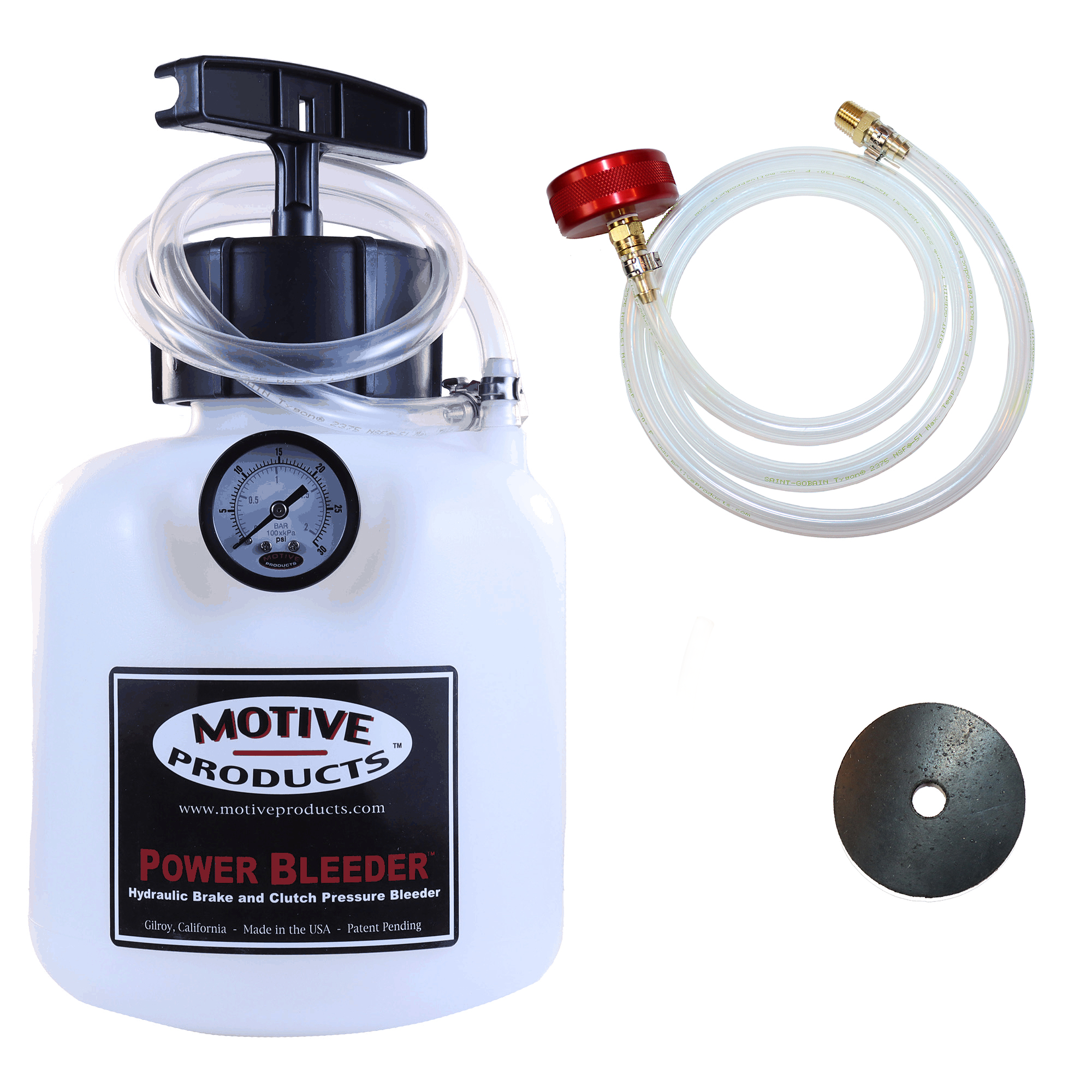

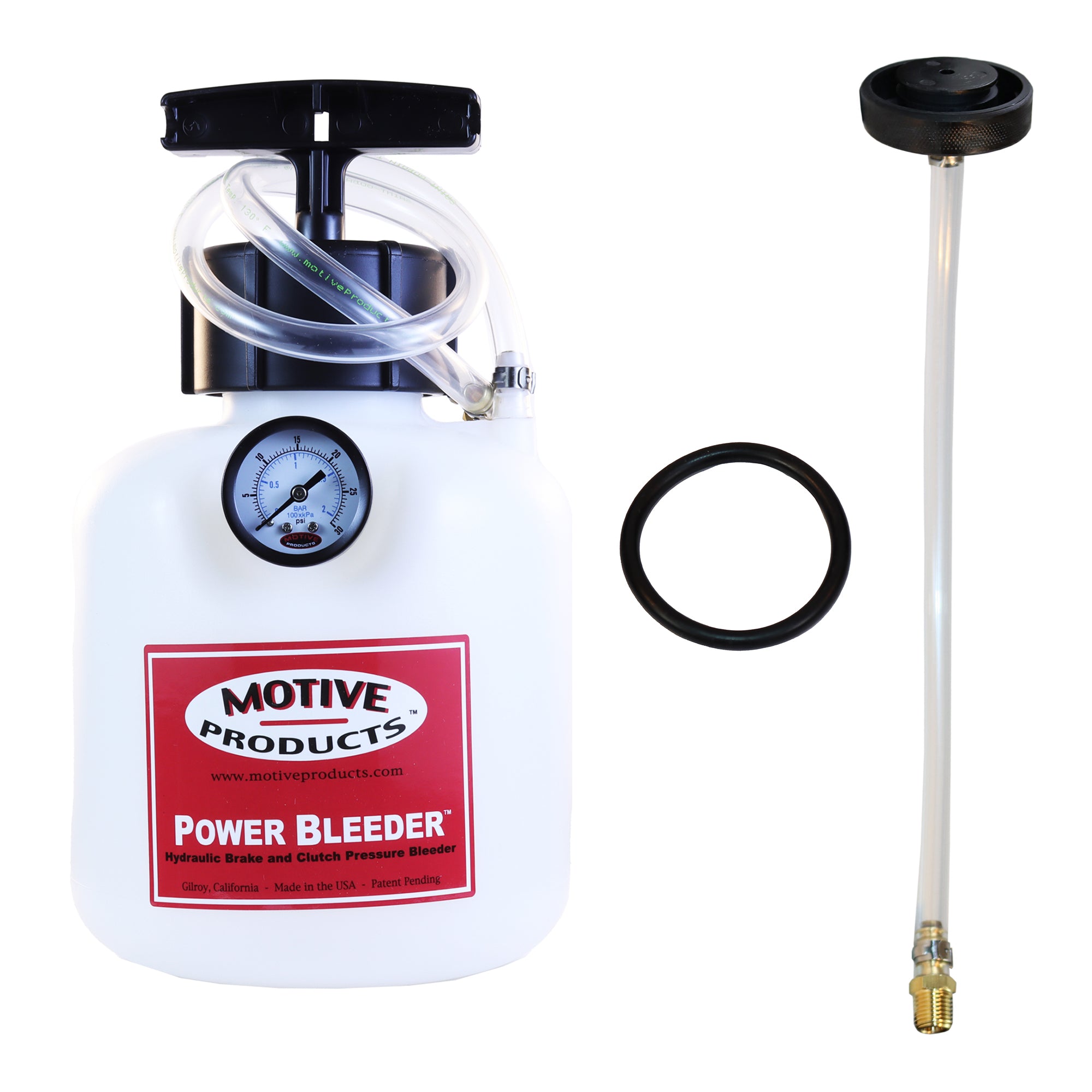

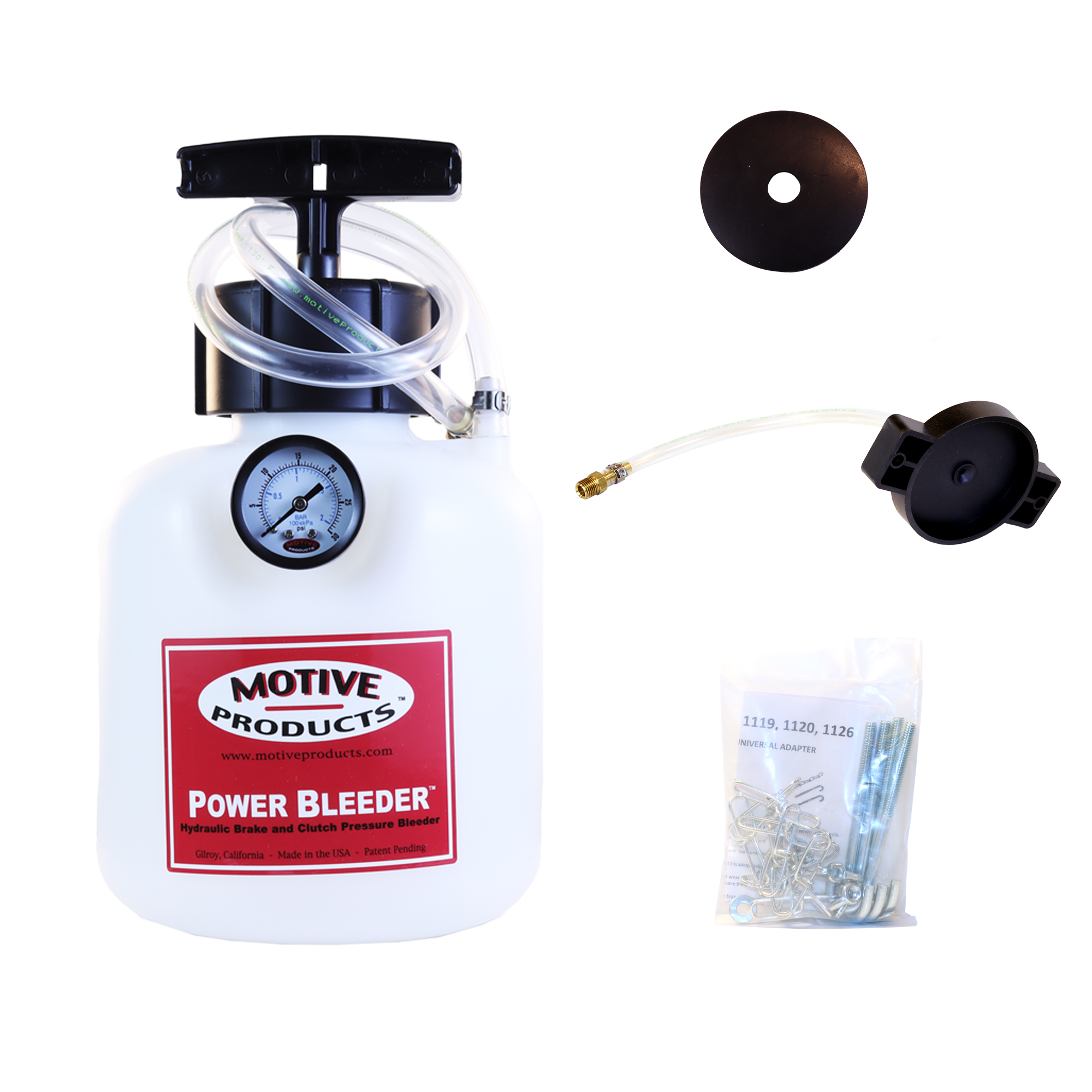









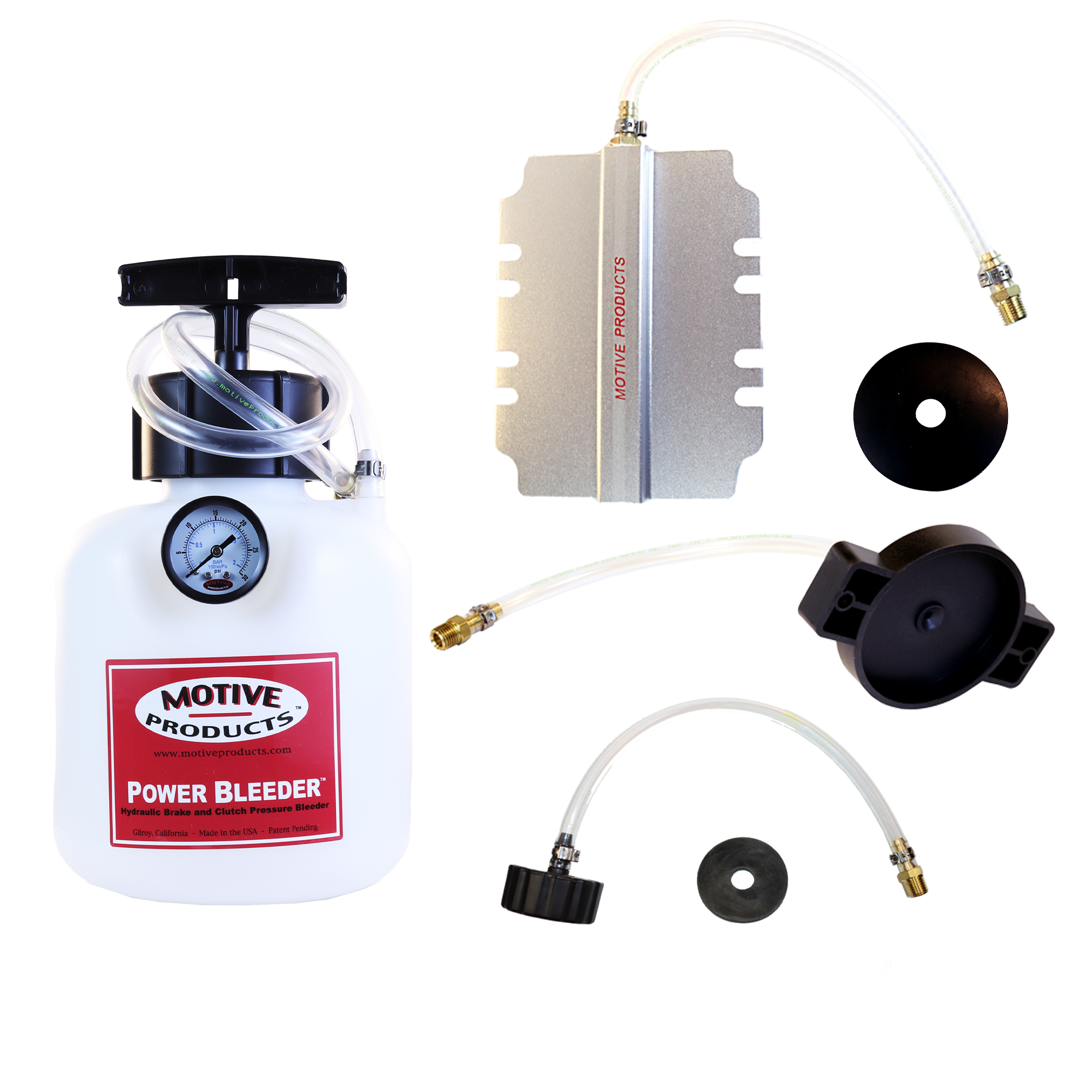

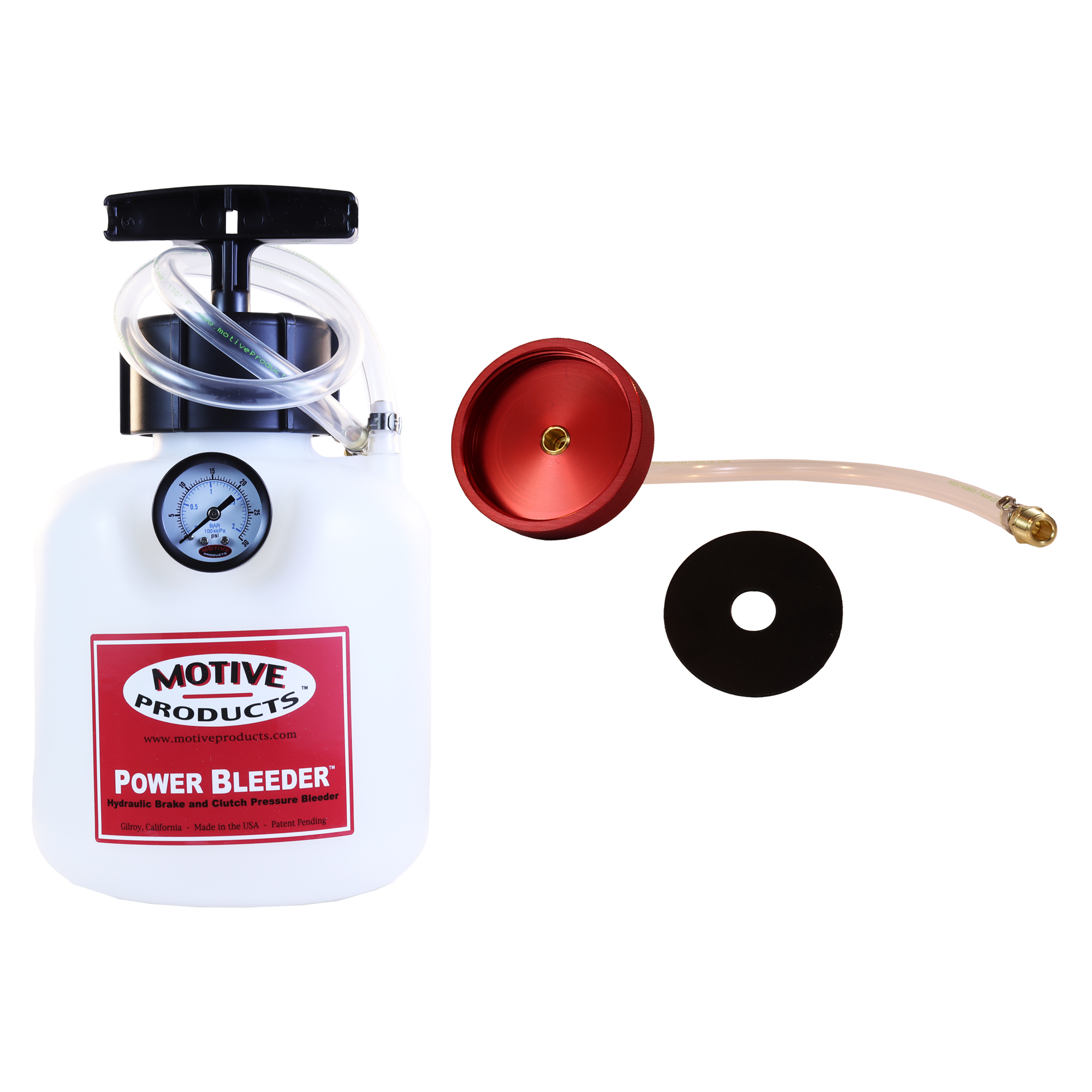

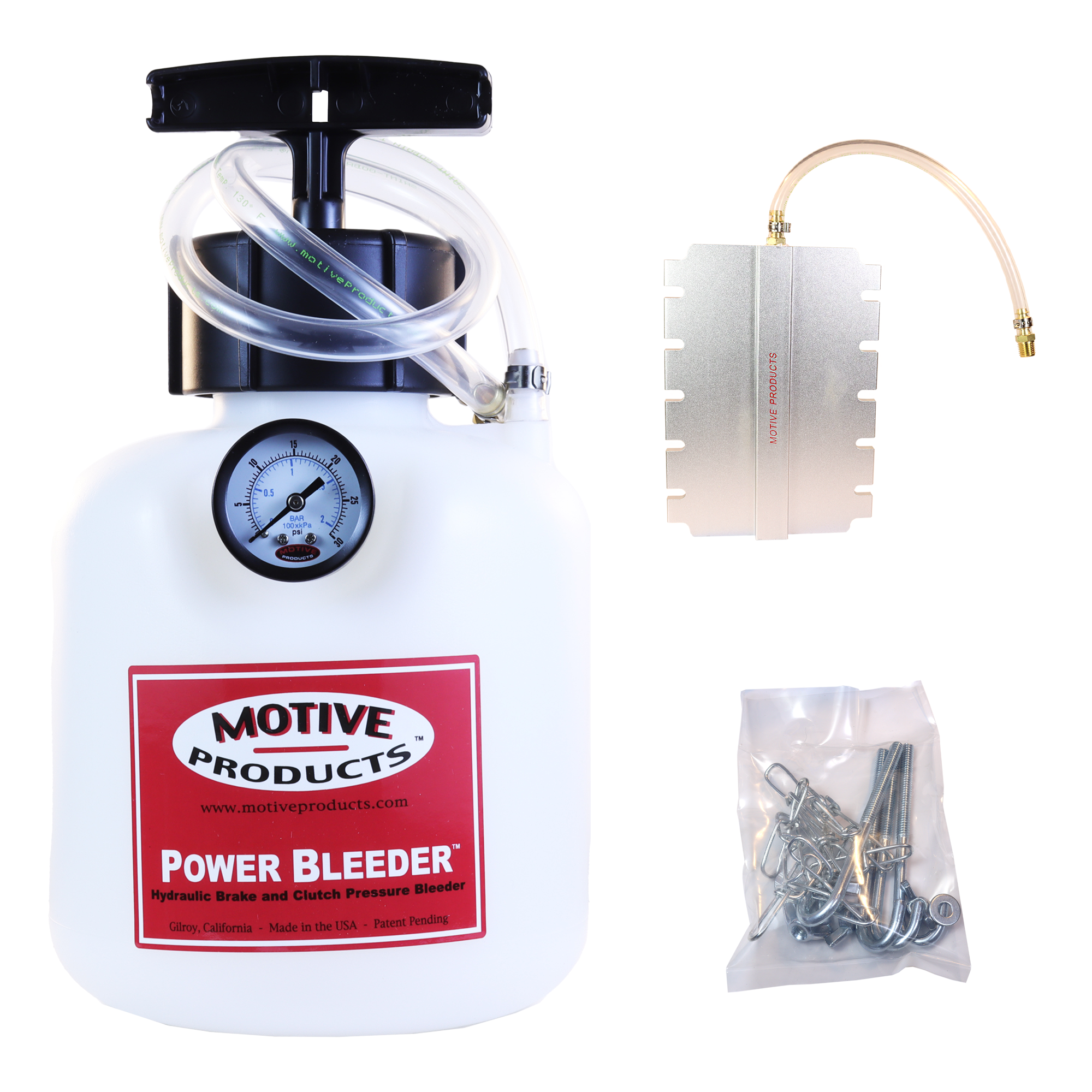

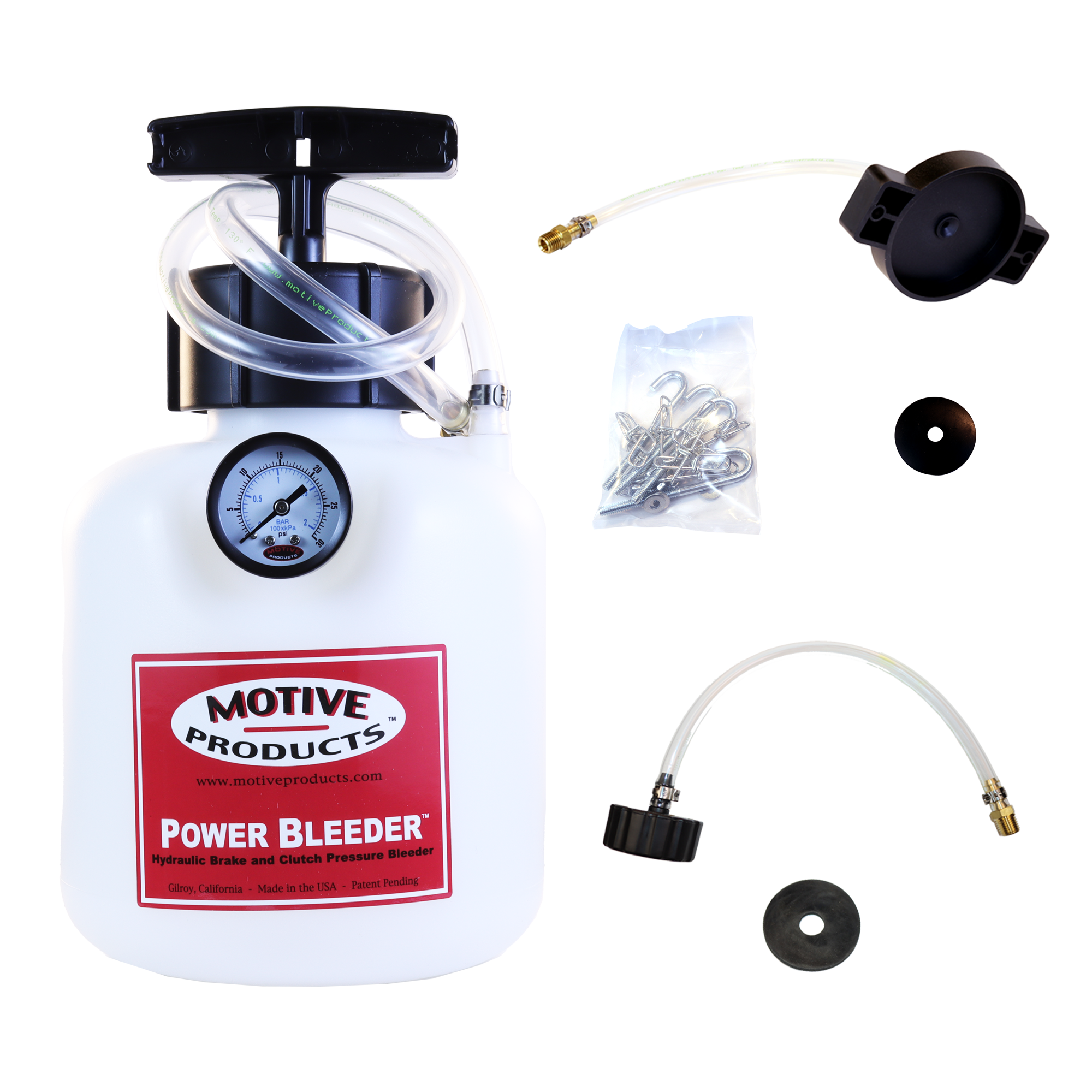









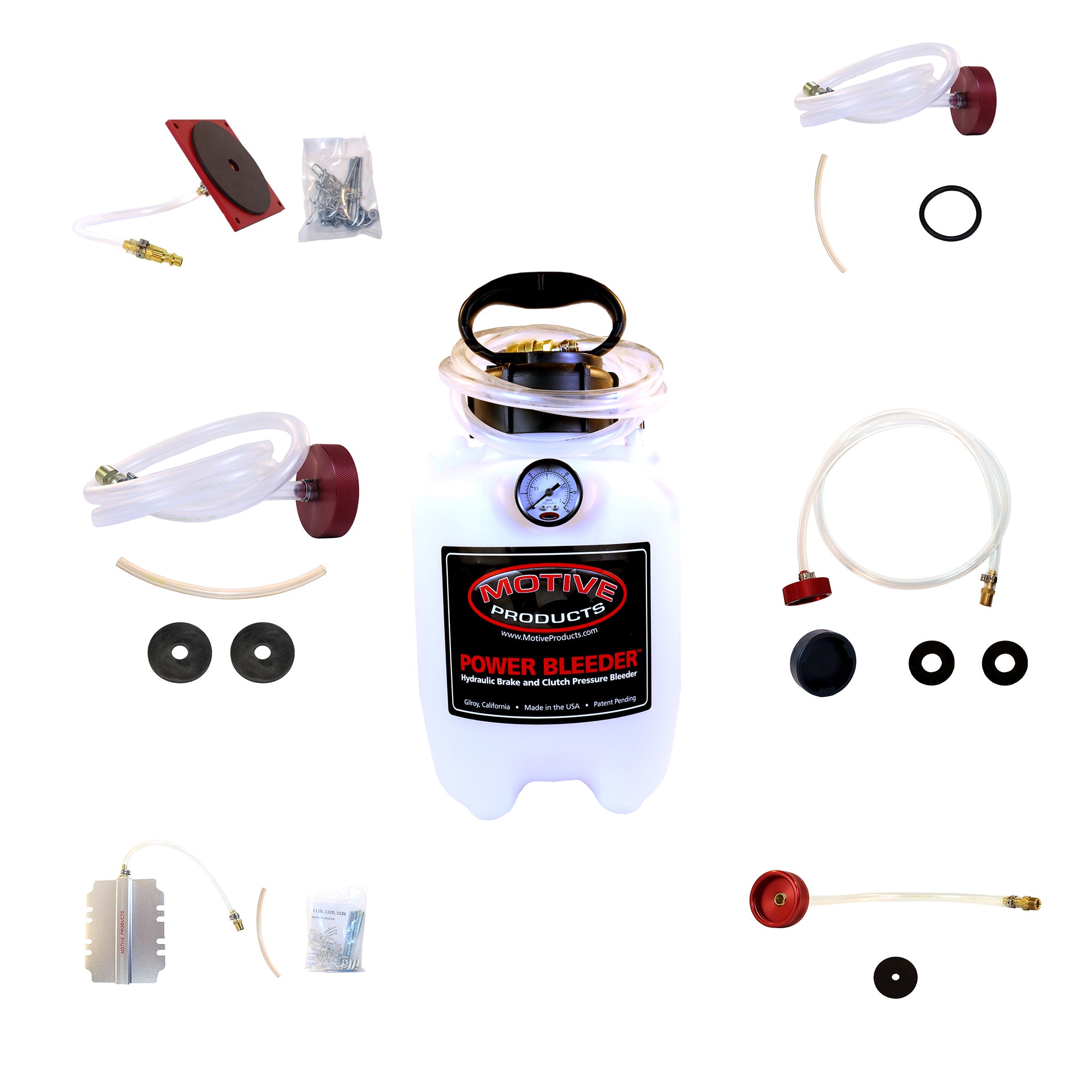

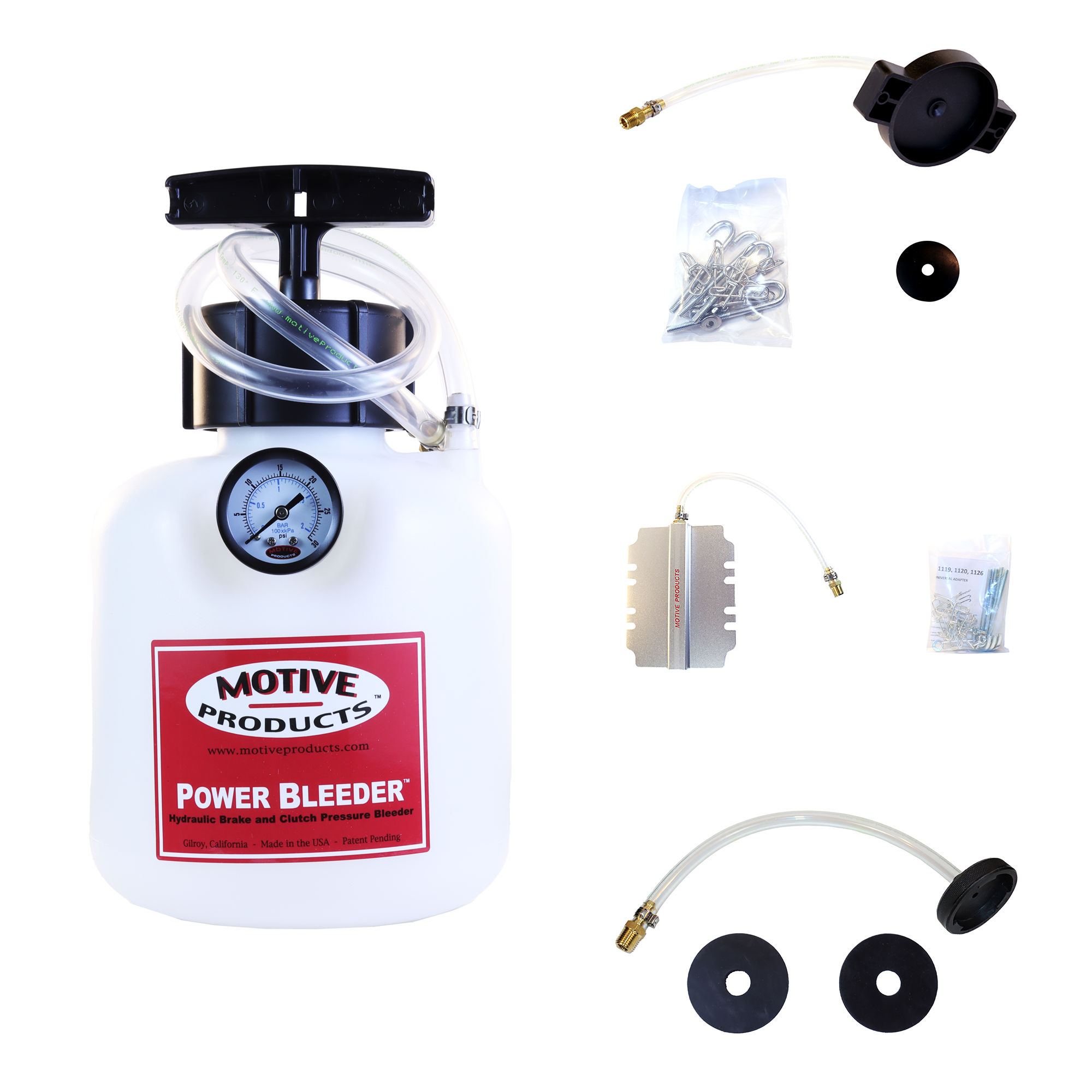

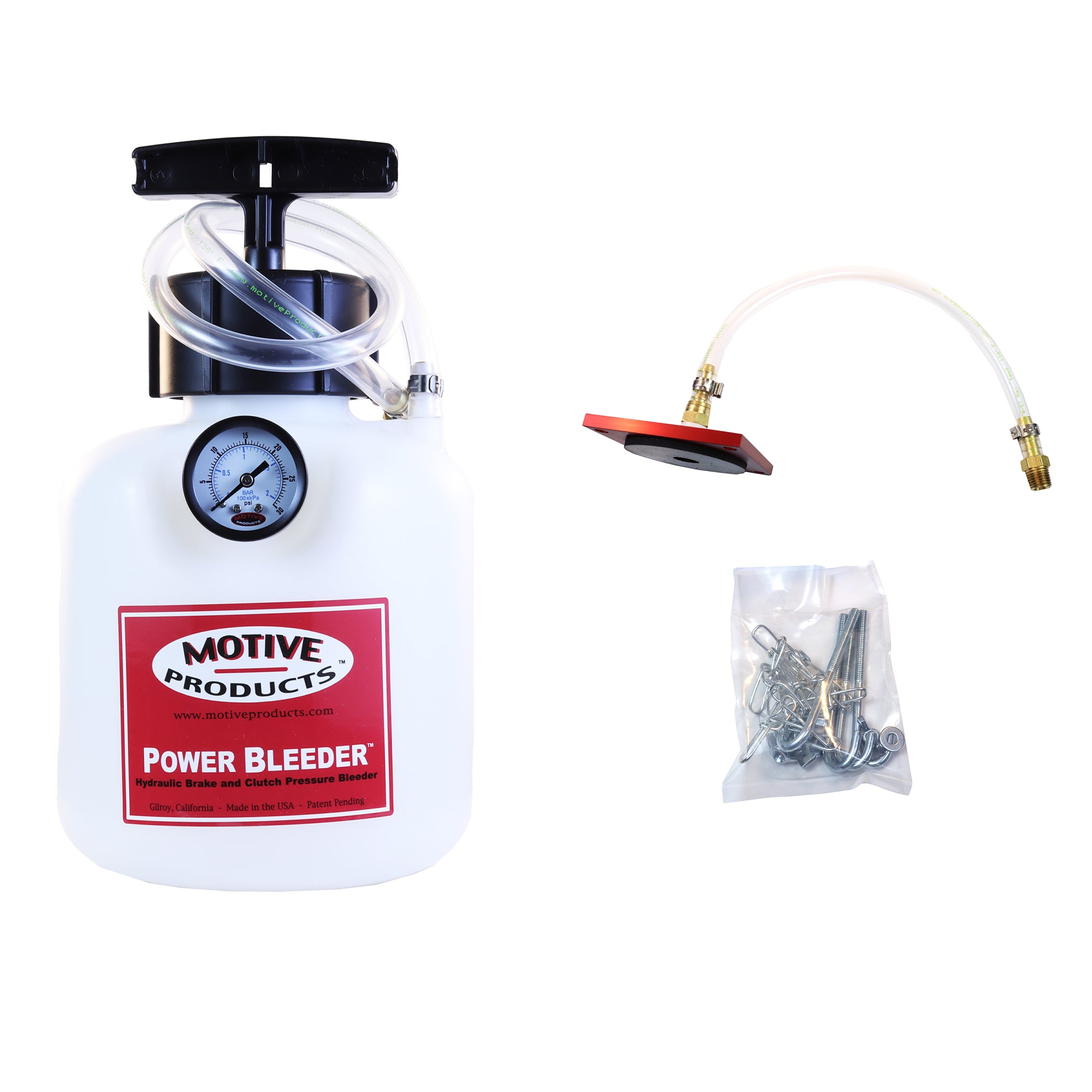

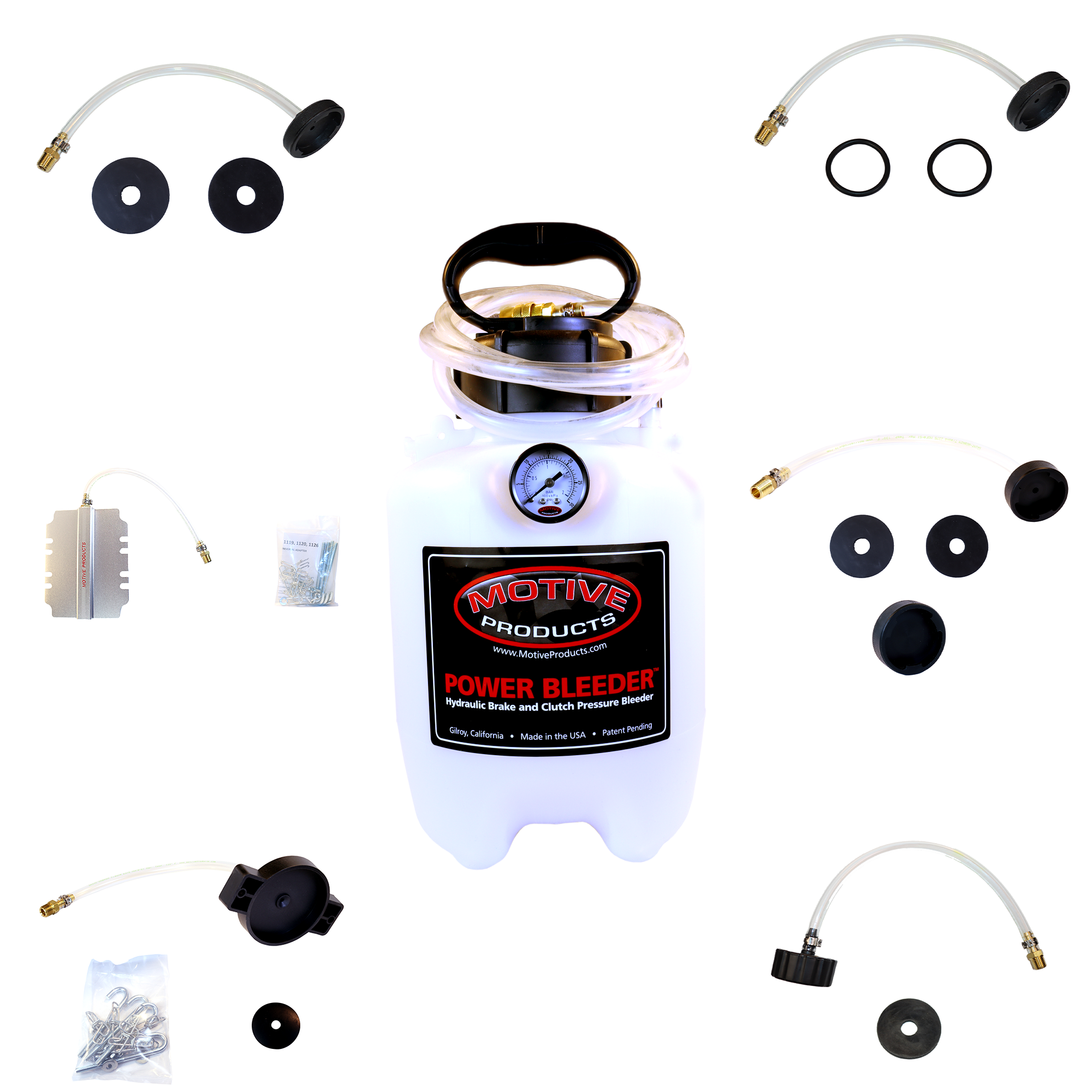










How to Choose the Right Brake Bleeder Kit
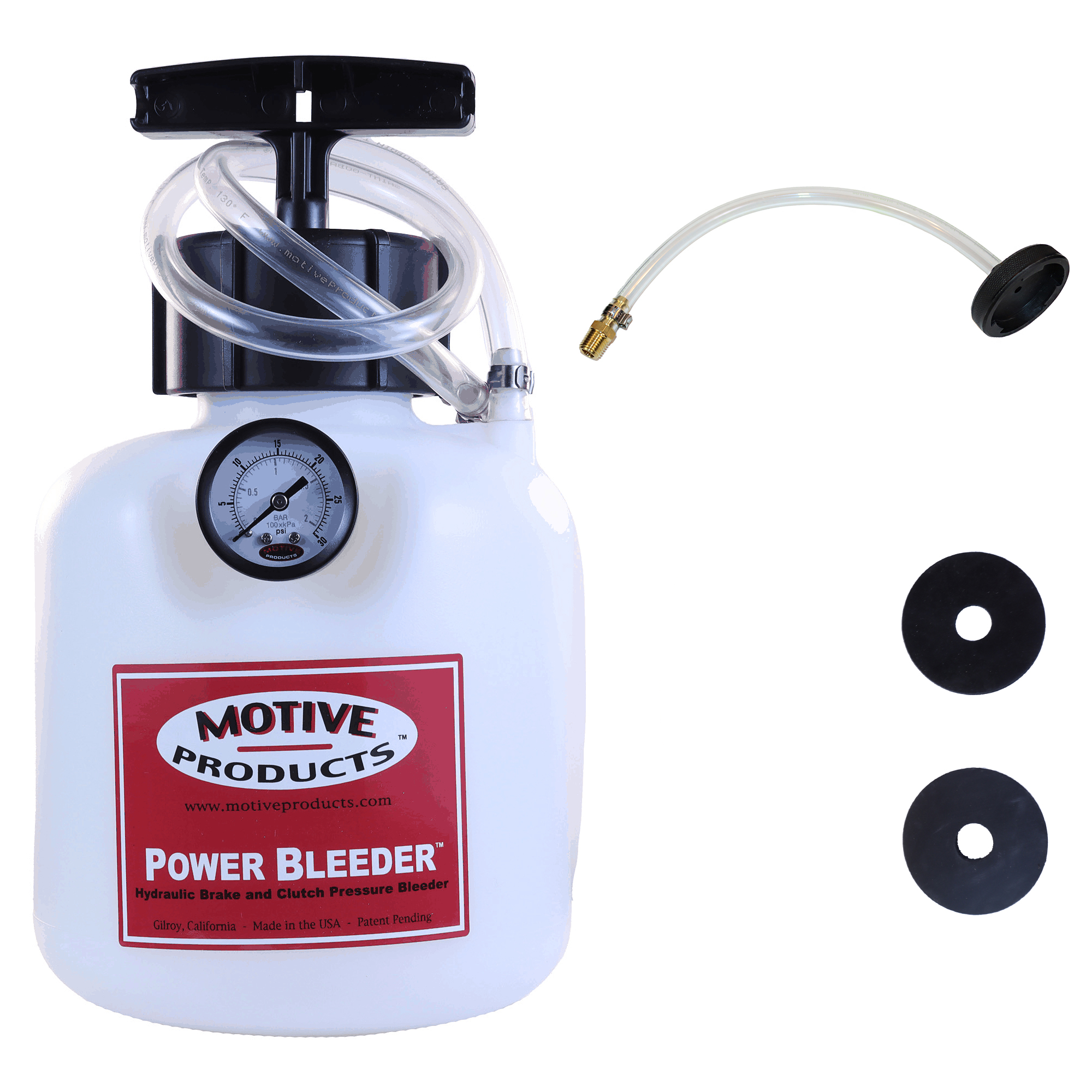
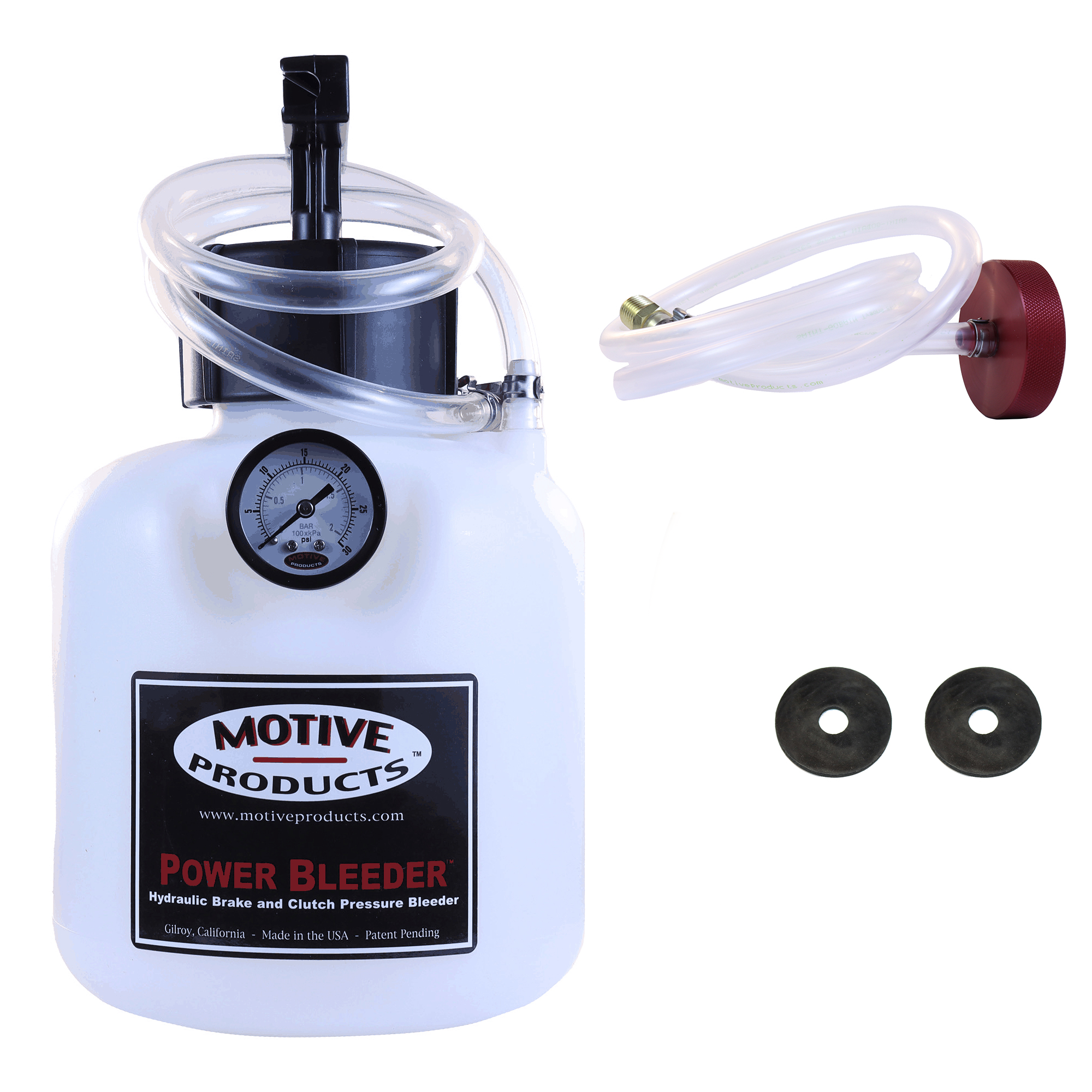
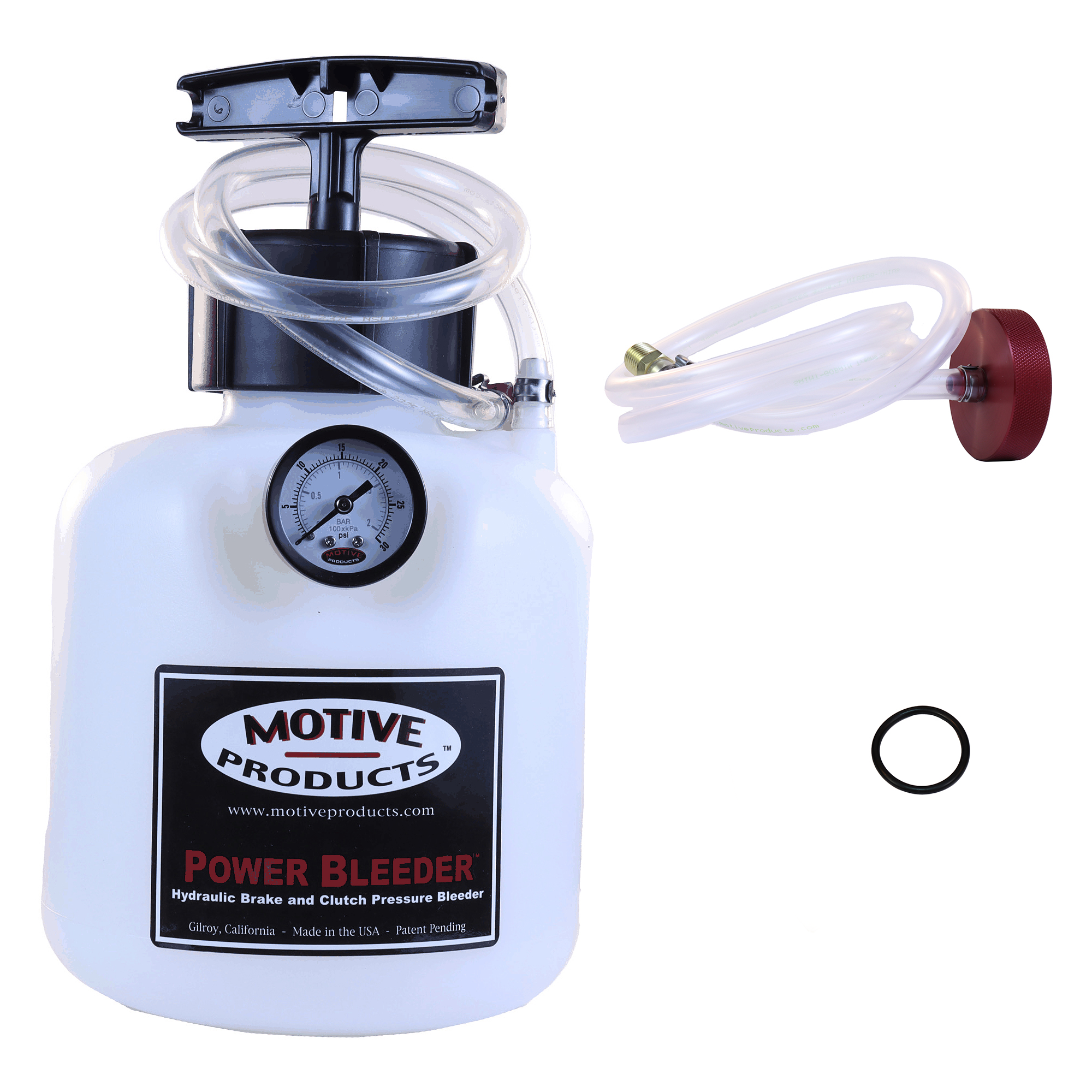
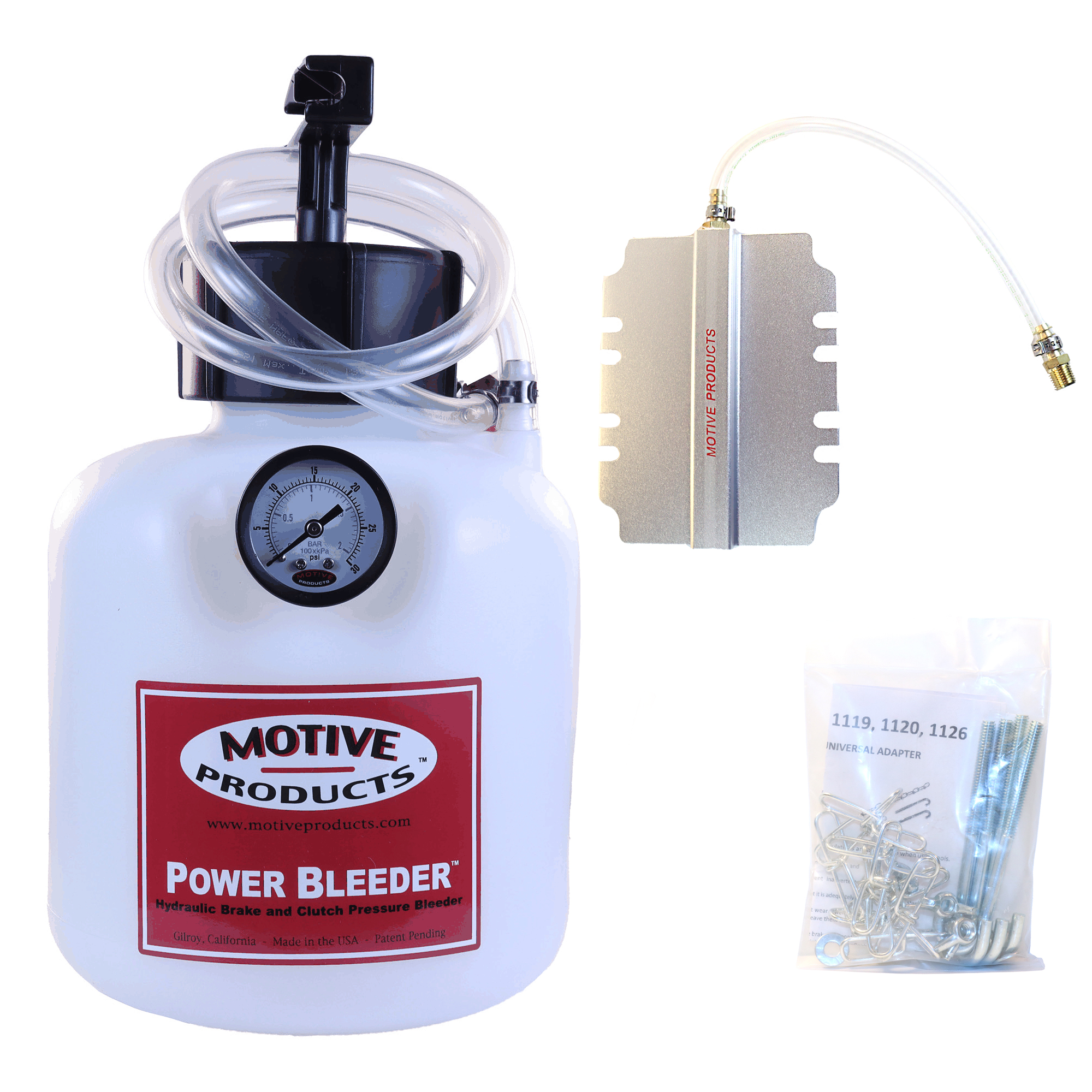
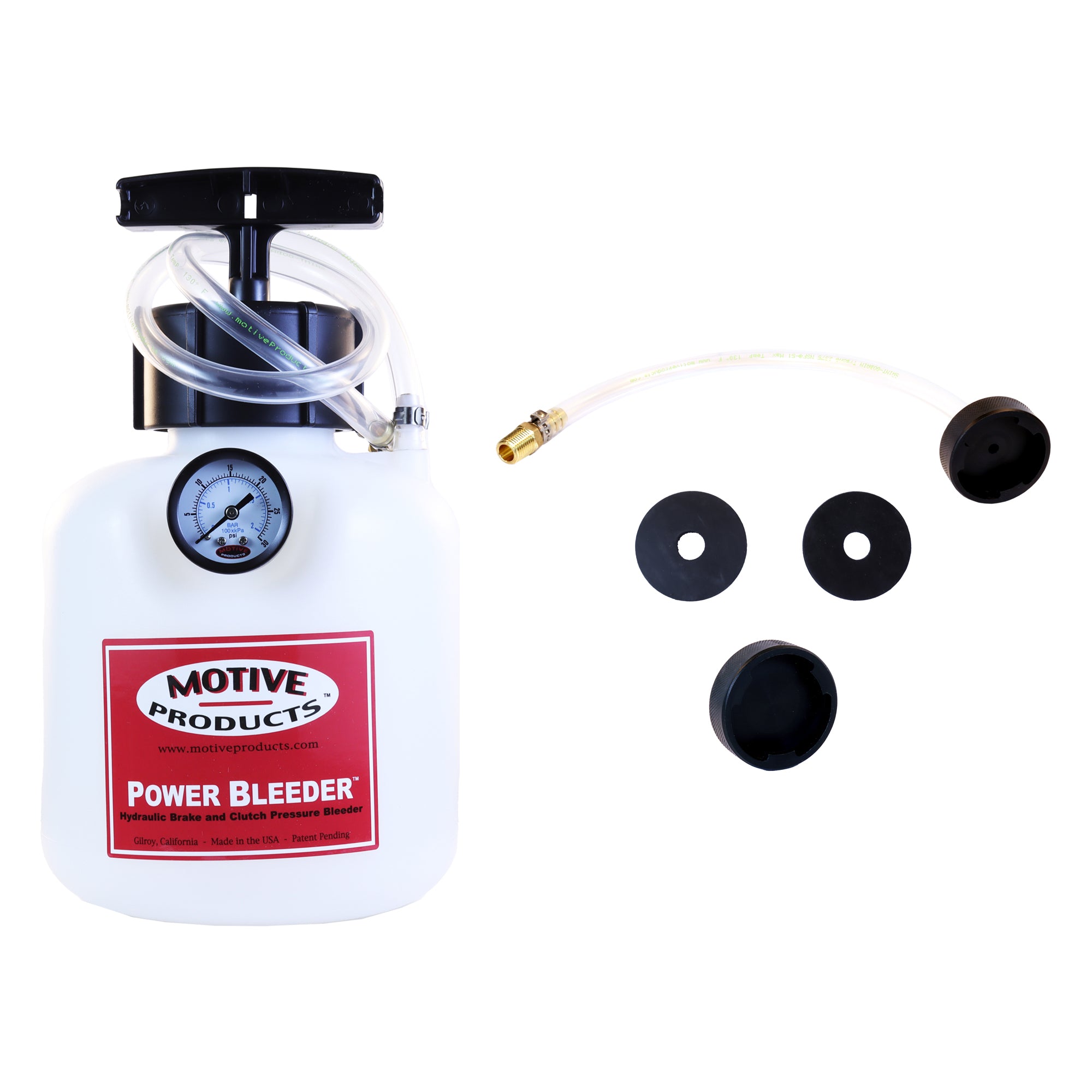
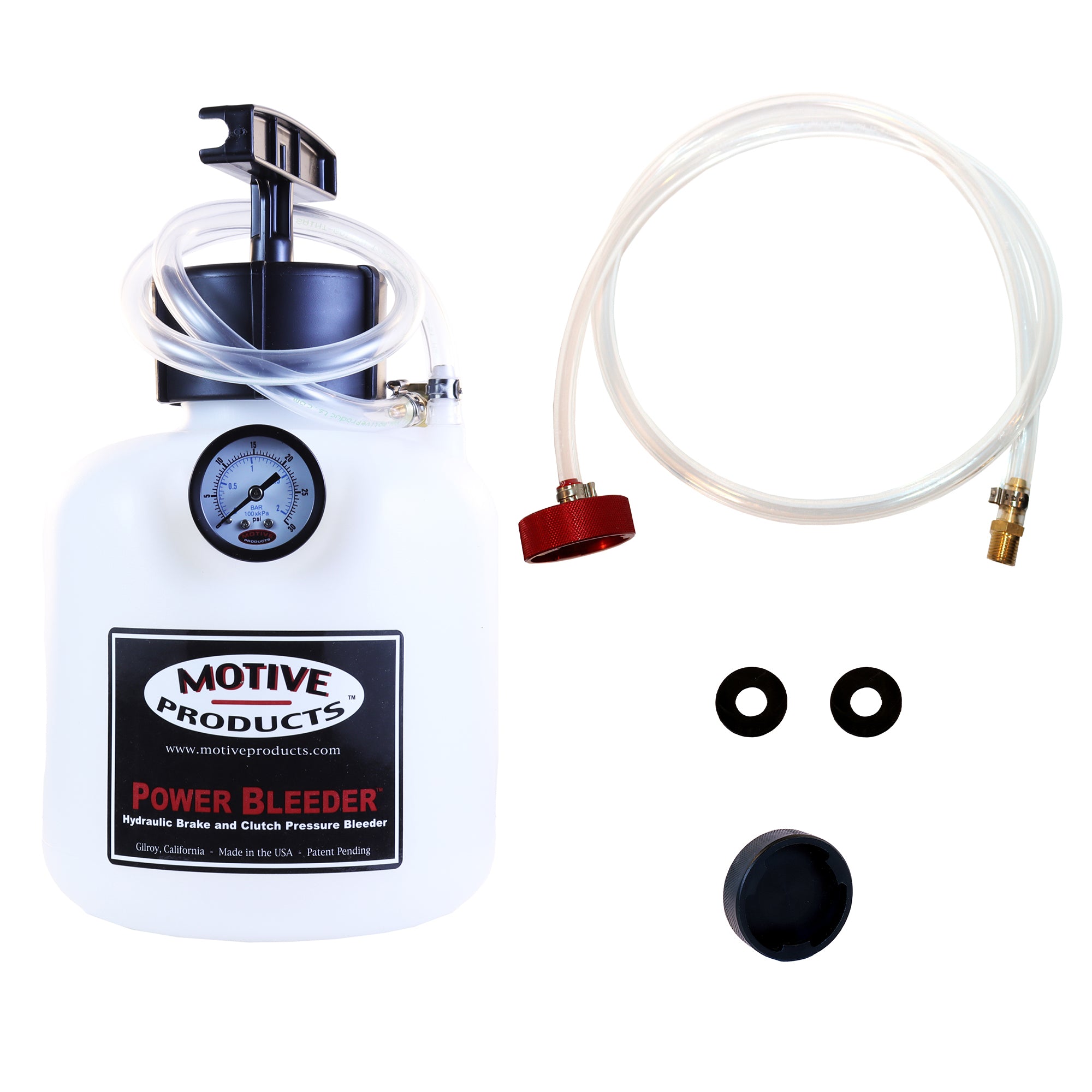
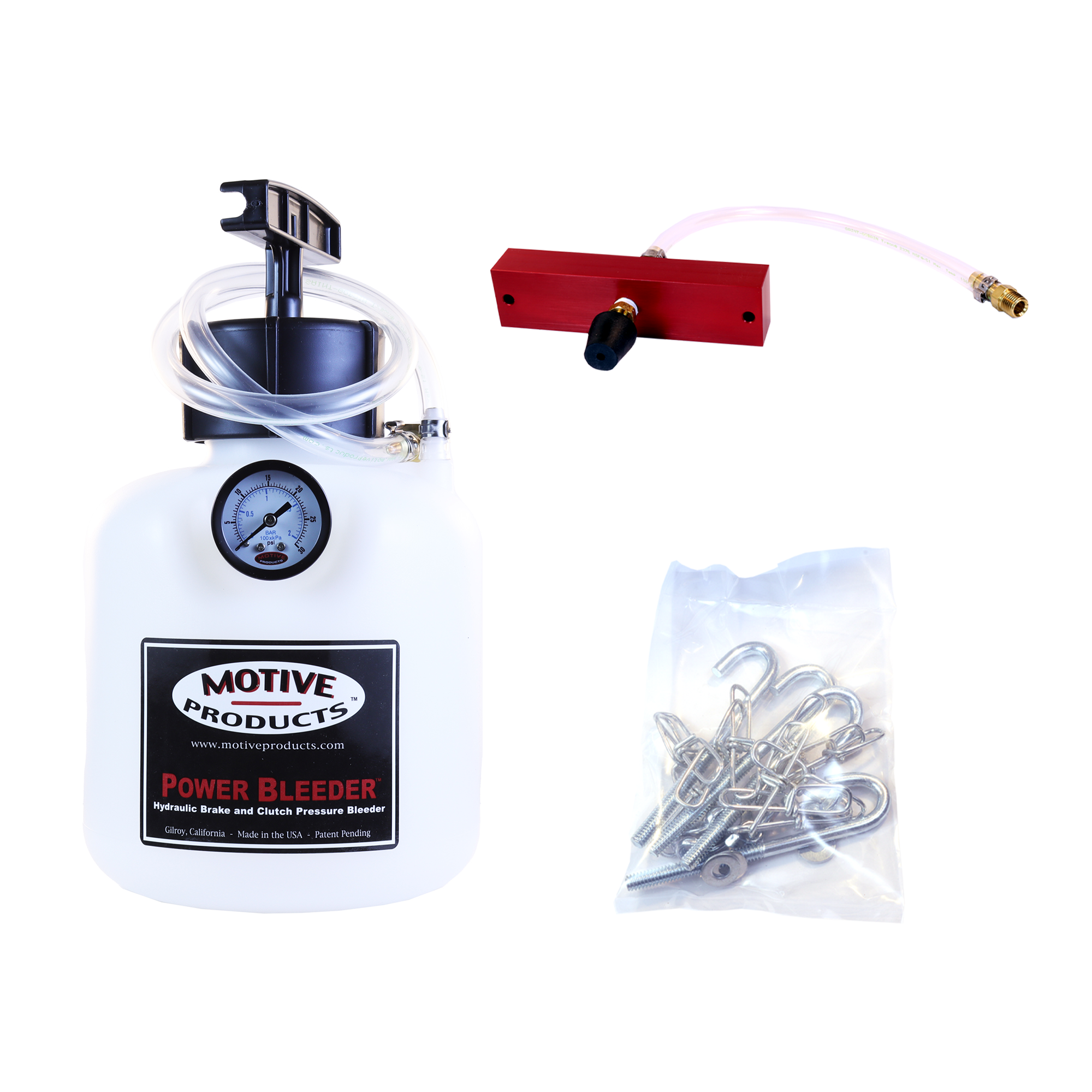
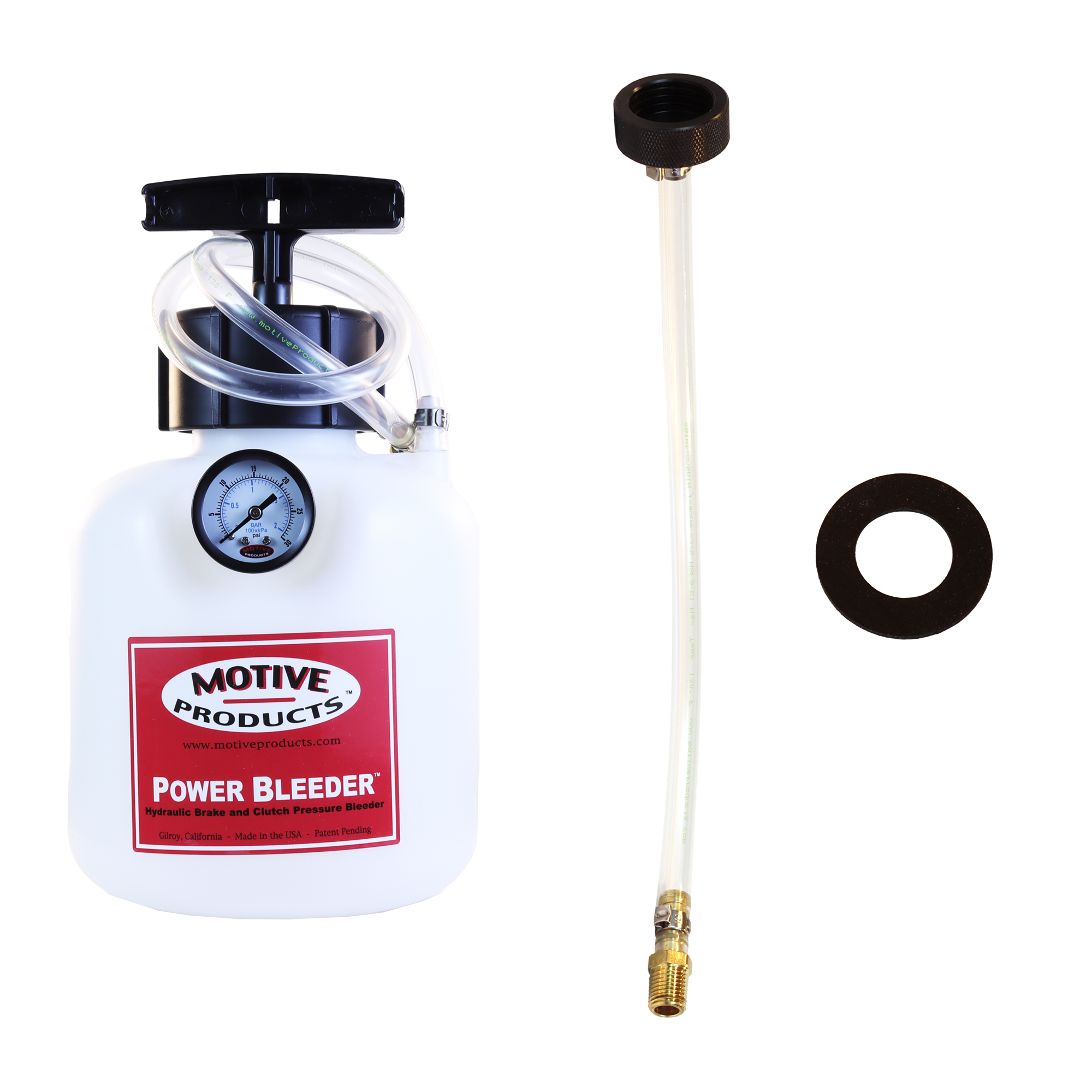
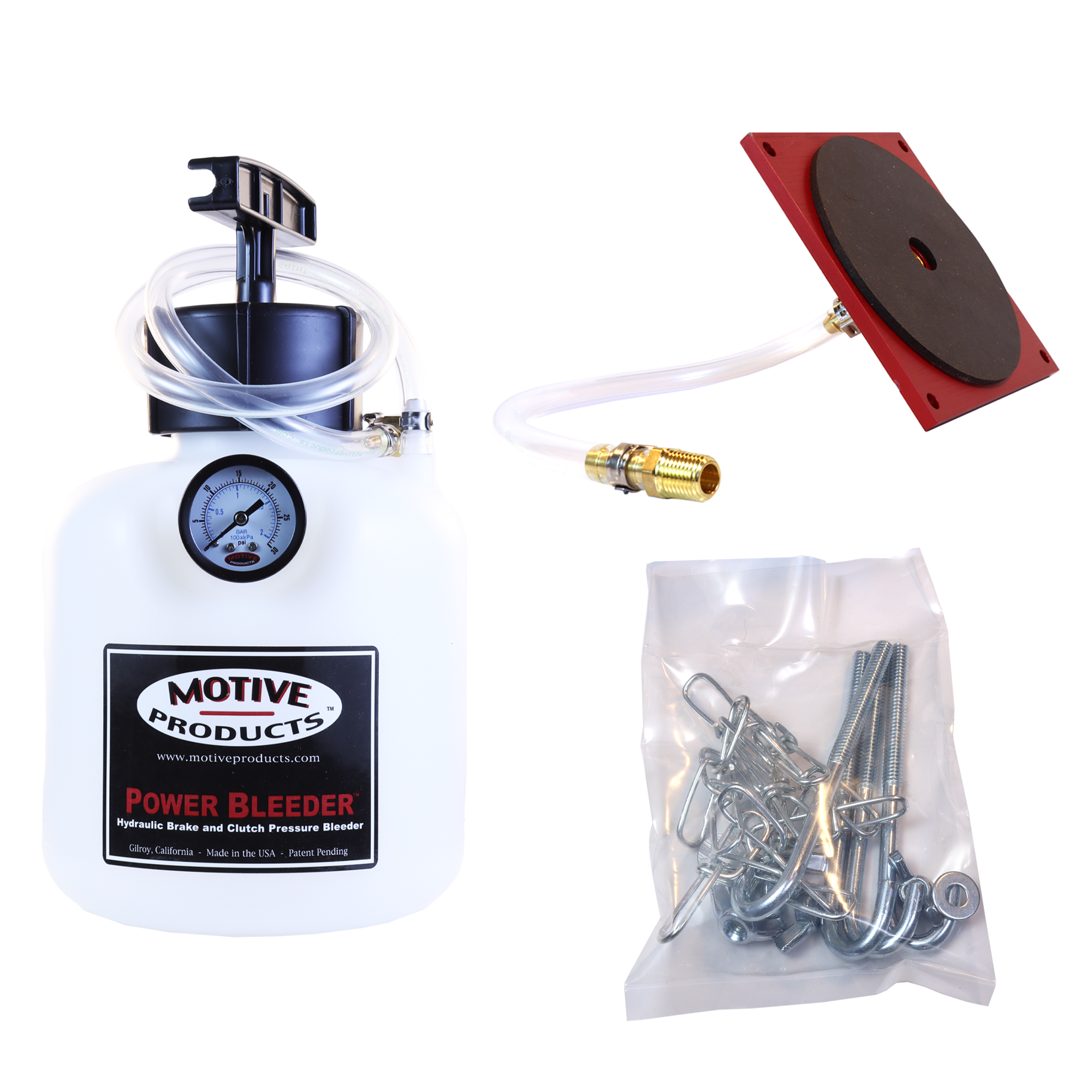
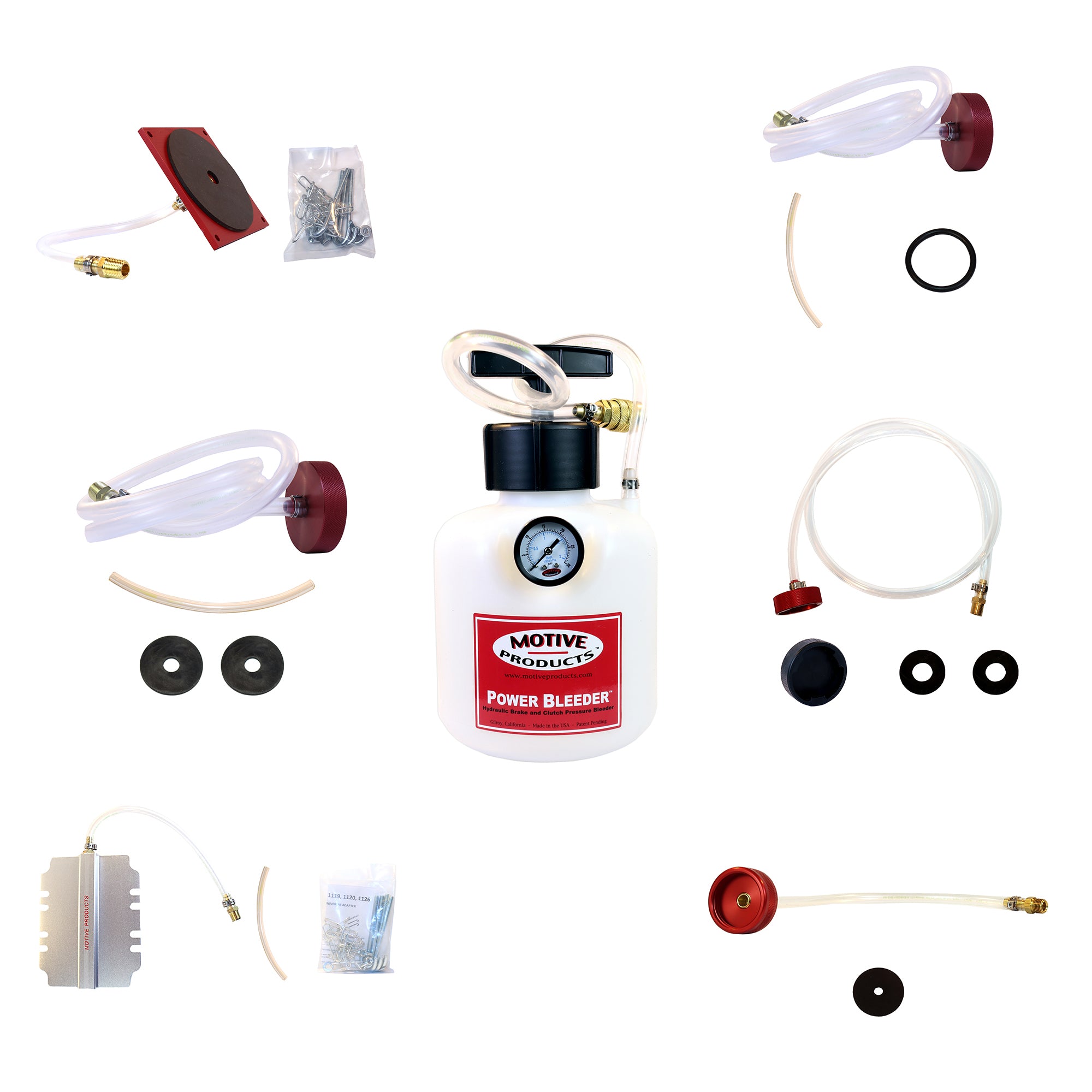
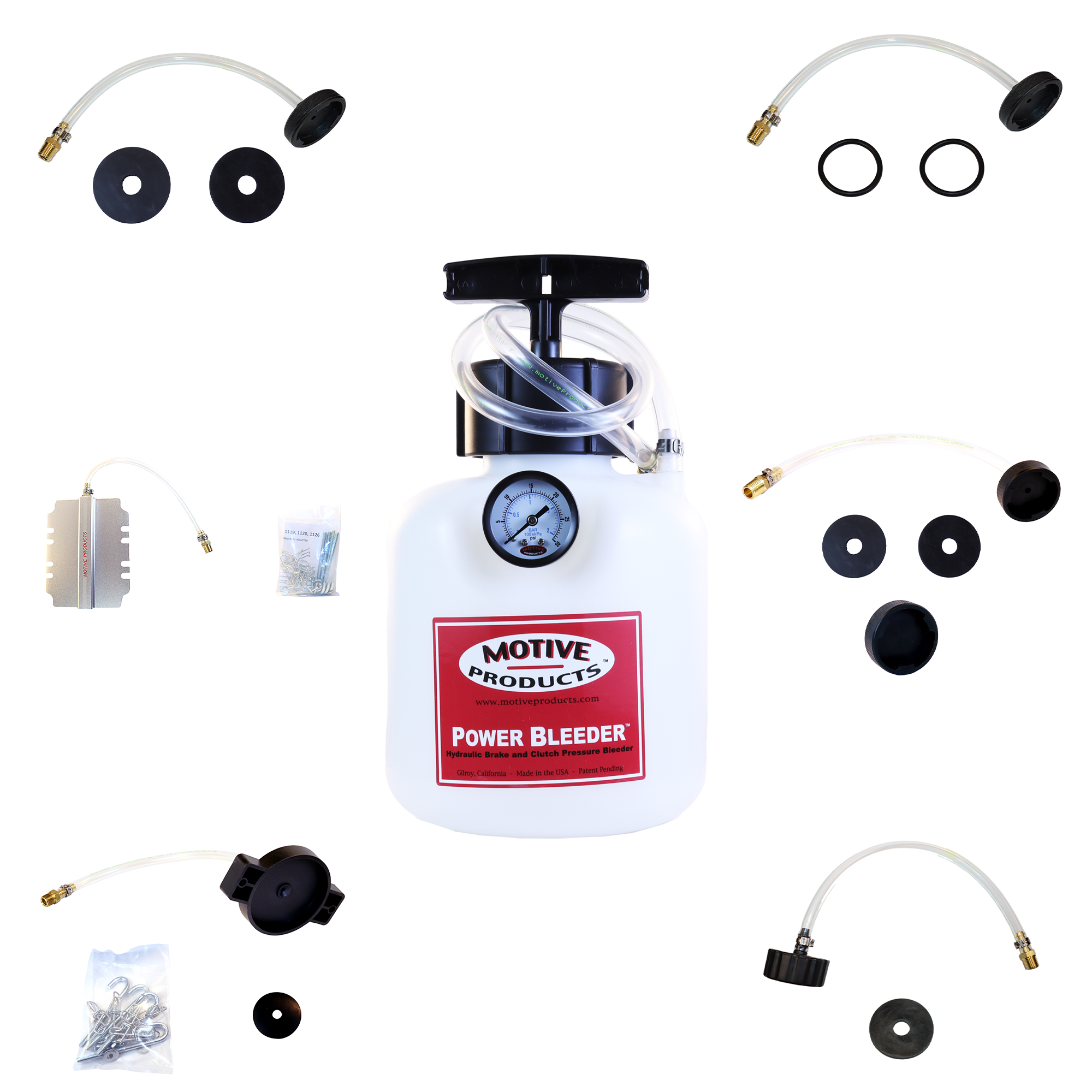
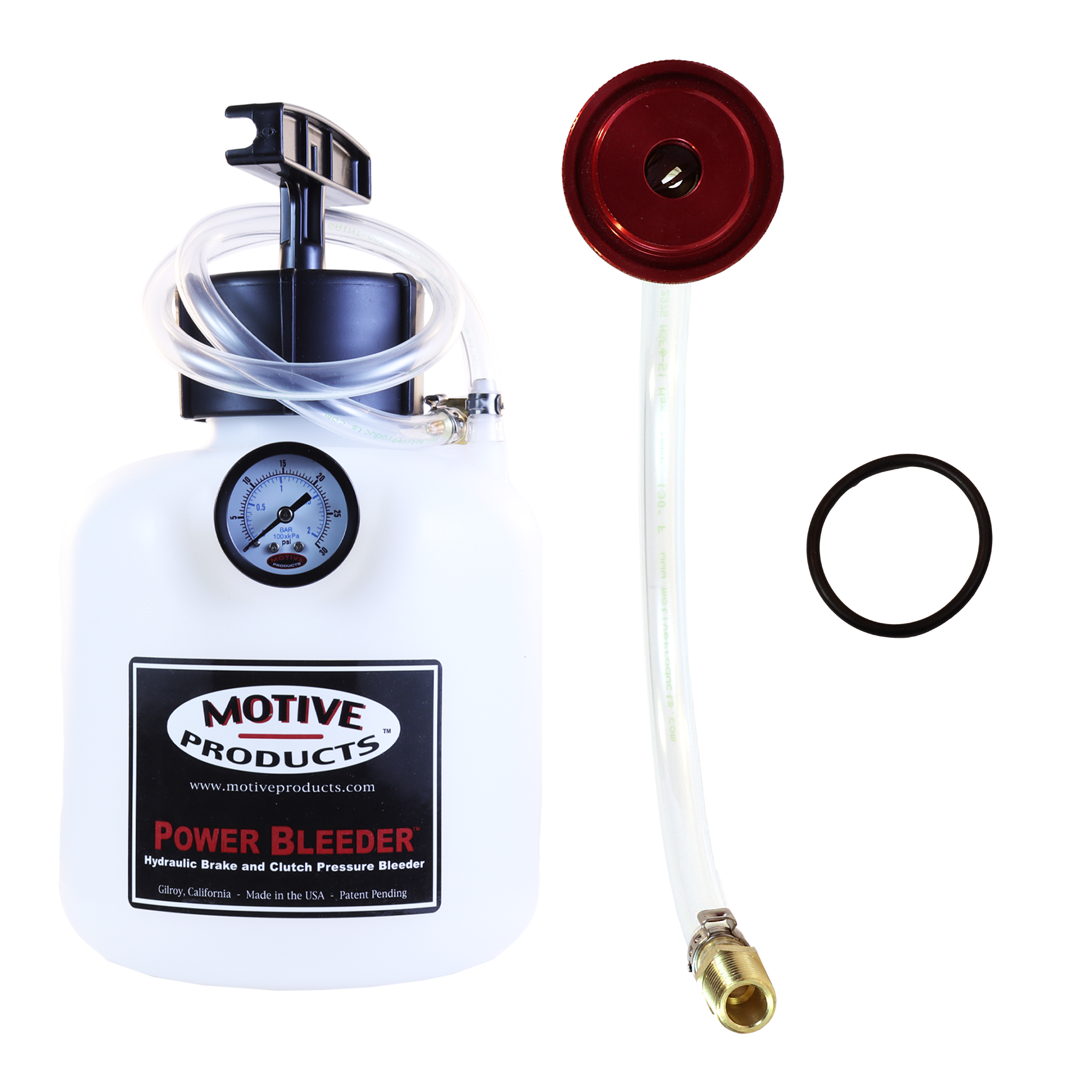
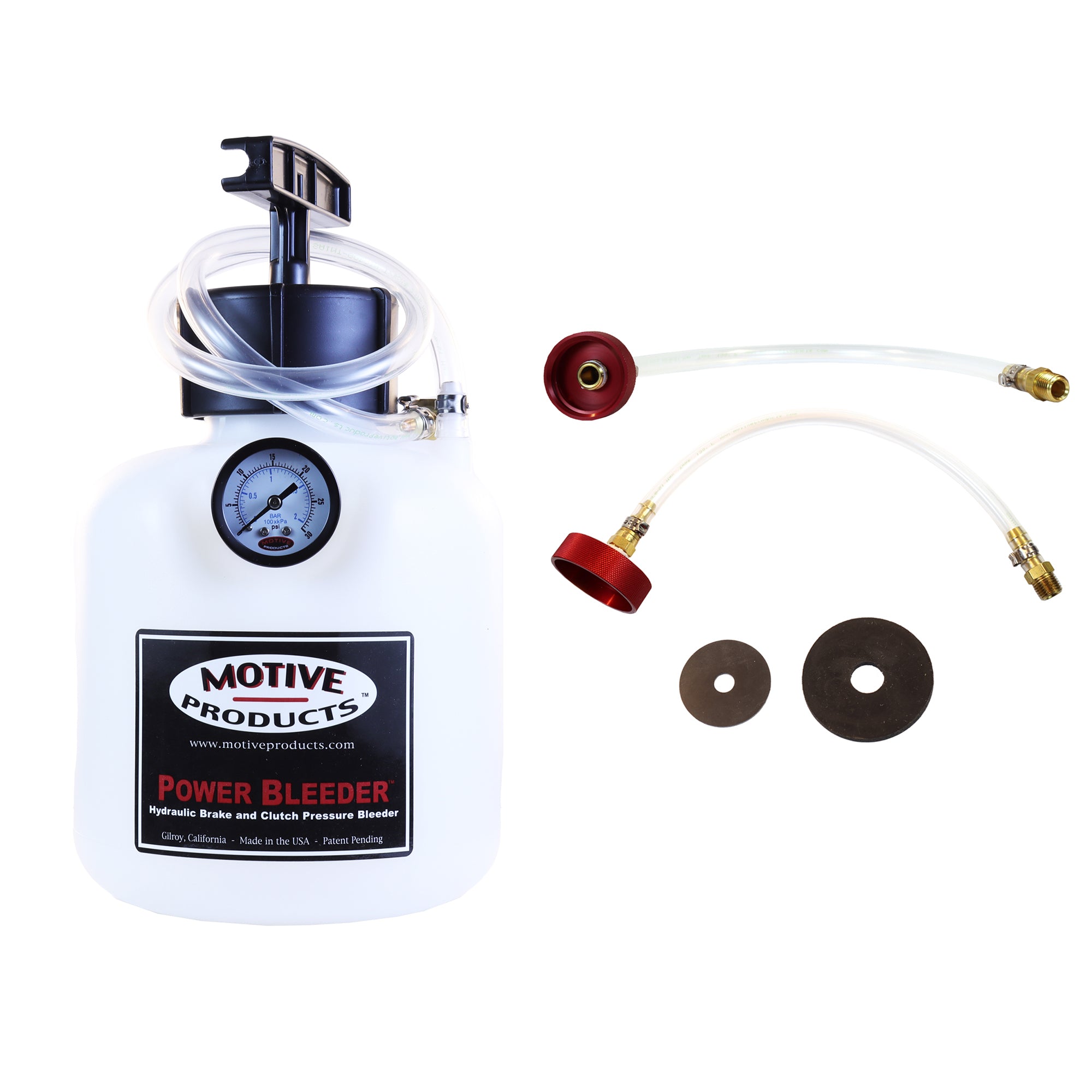
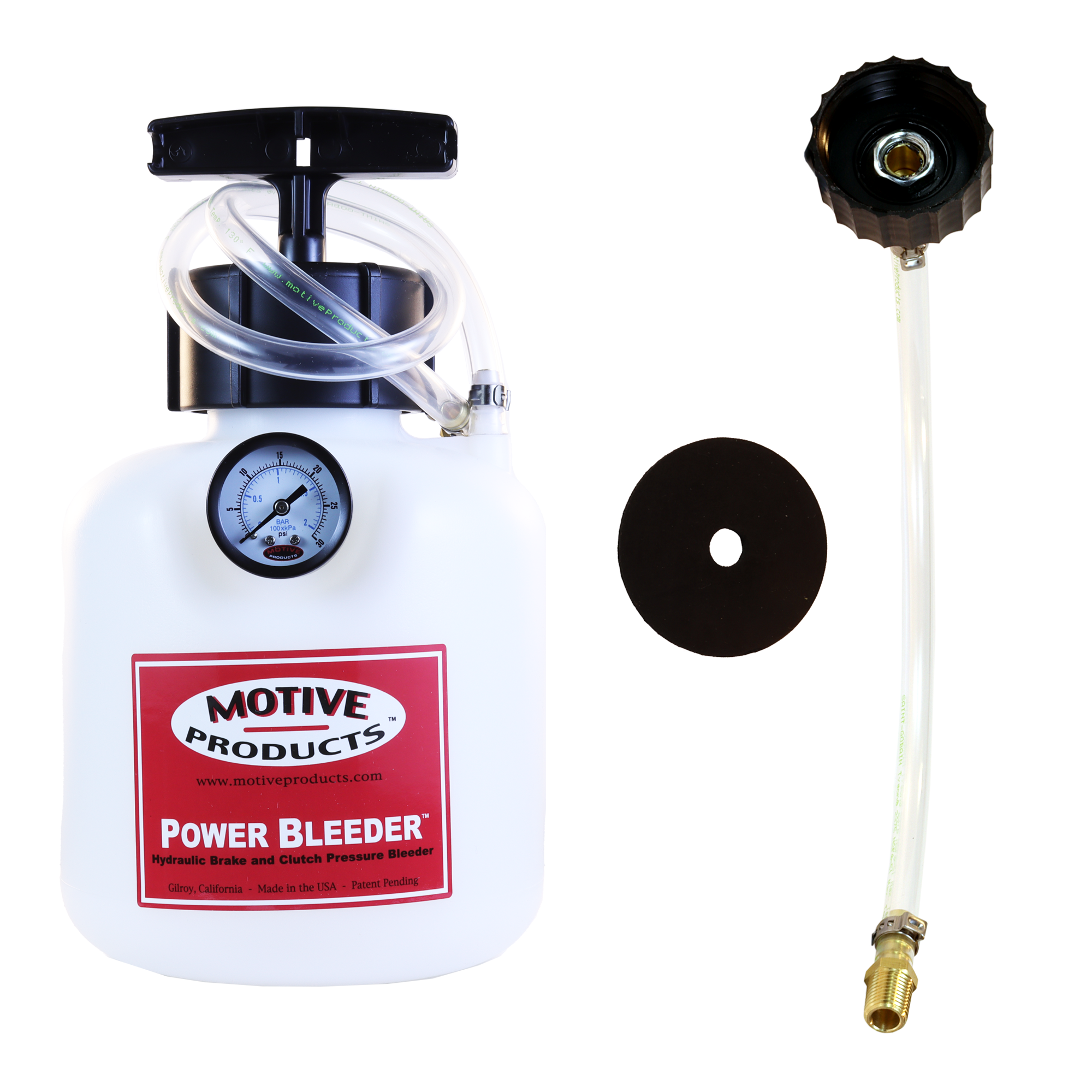
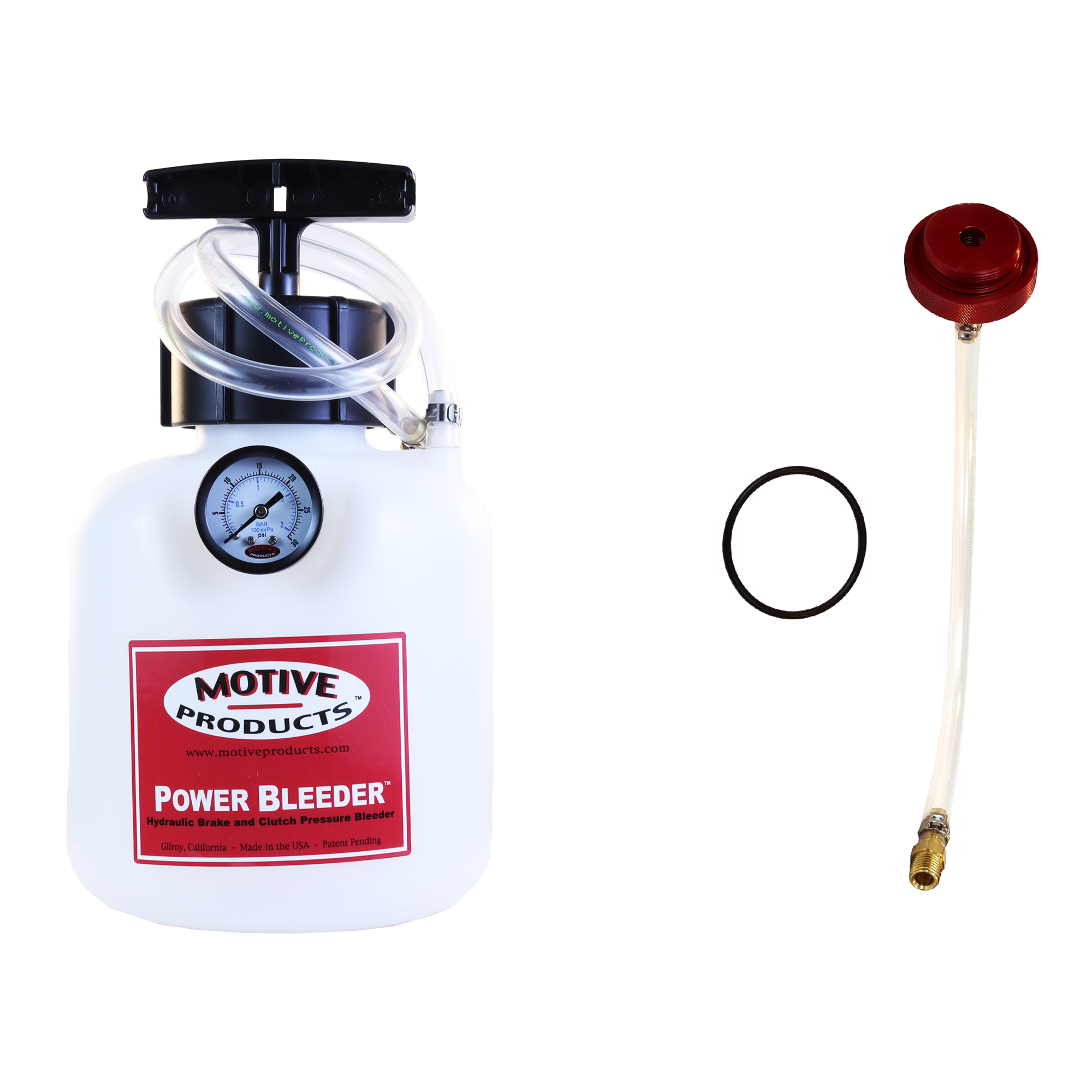
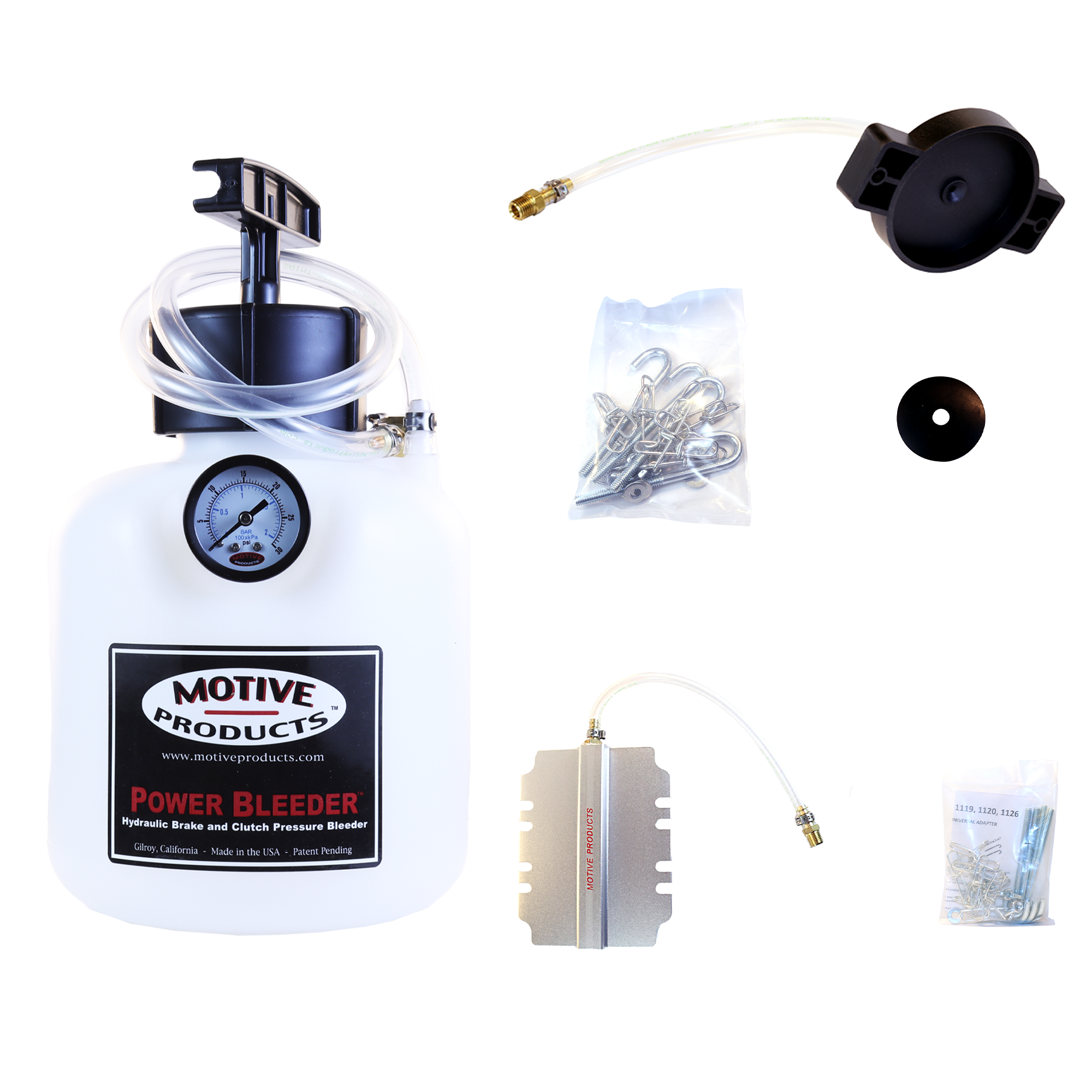
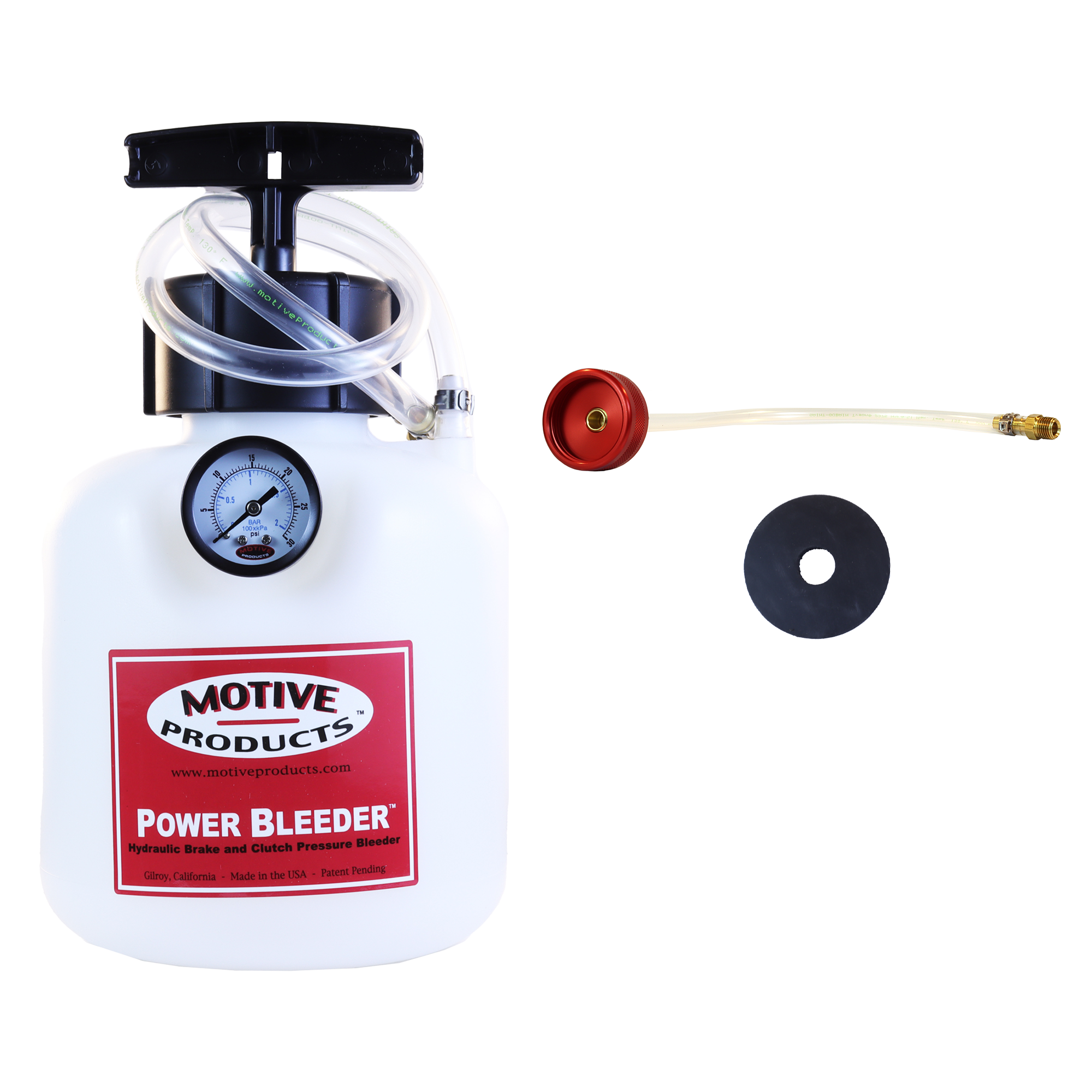
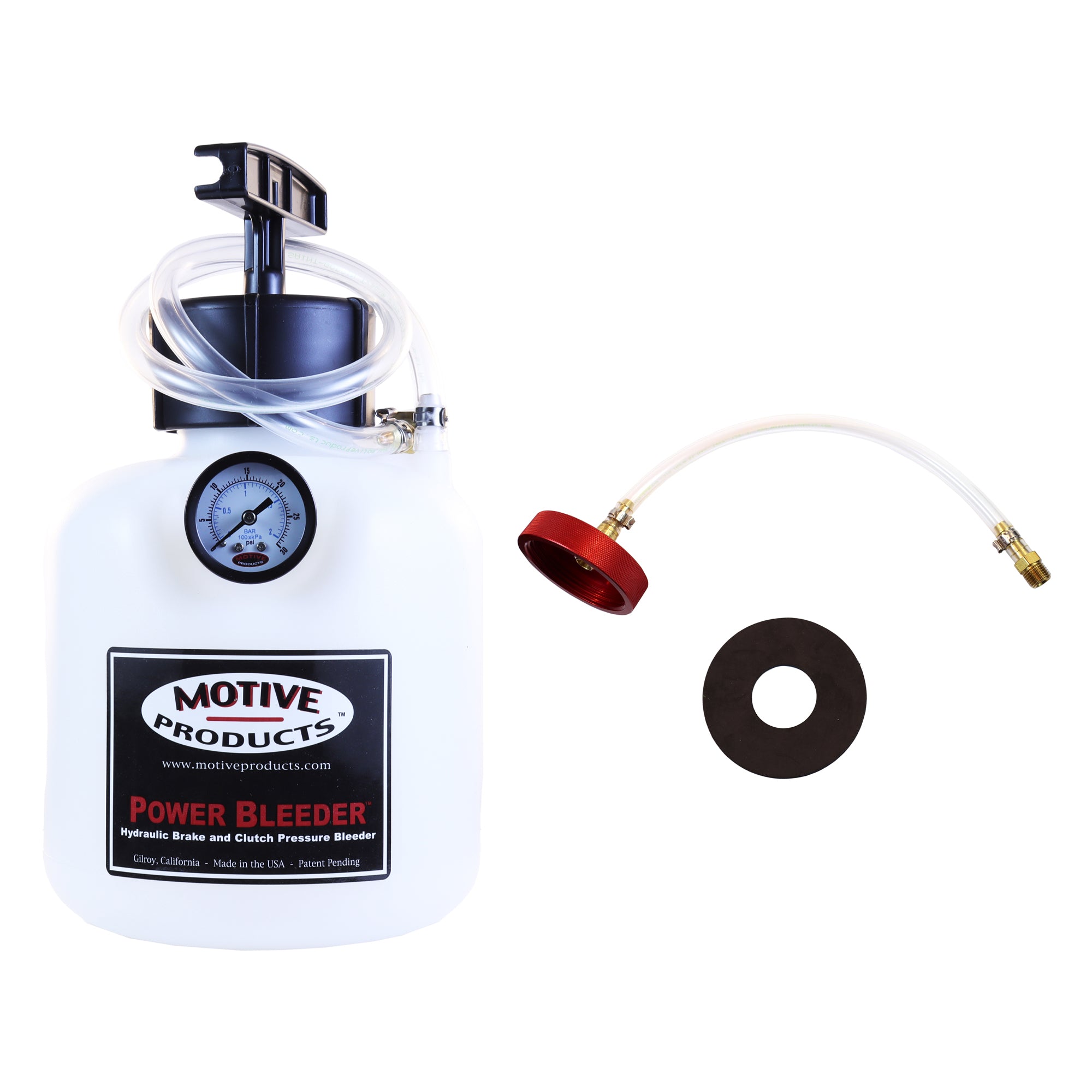
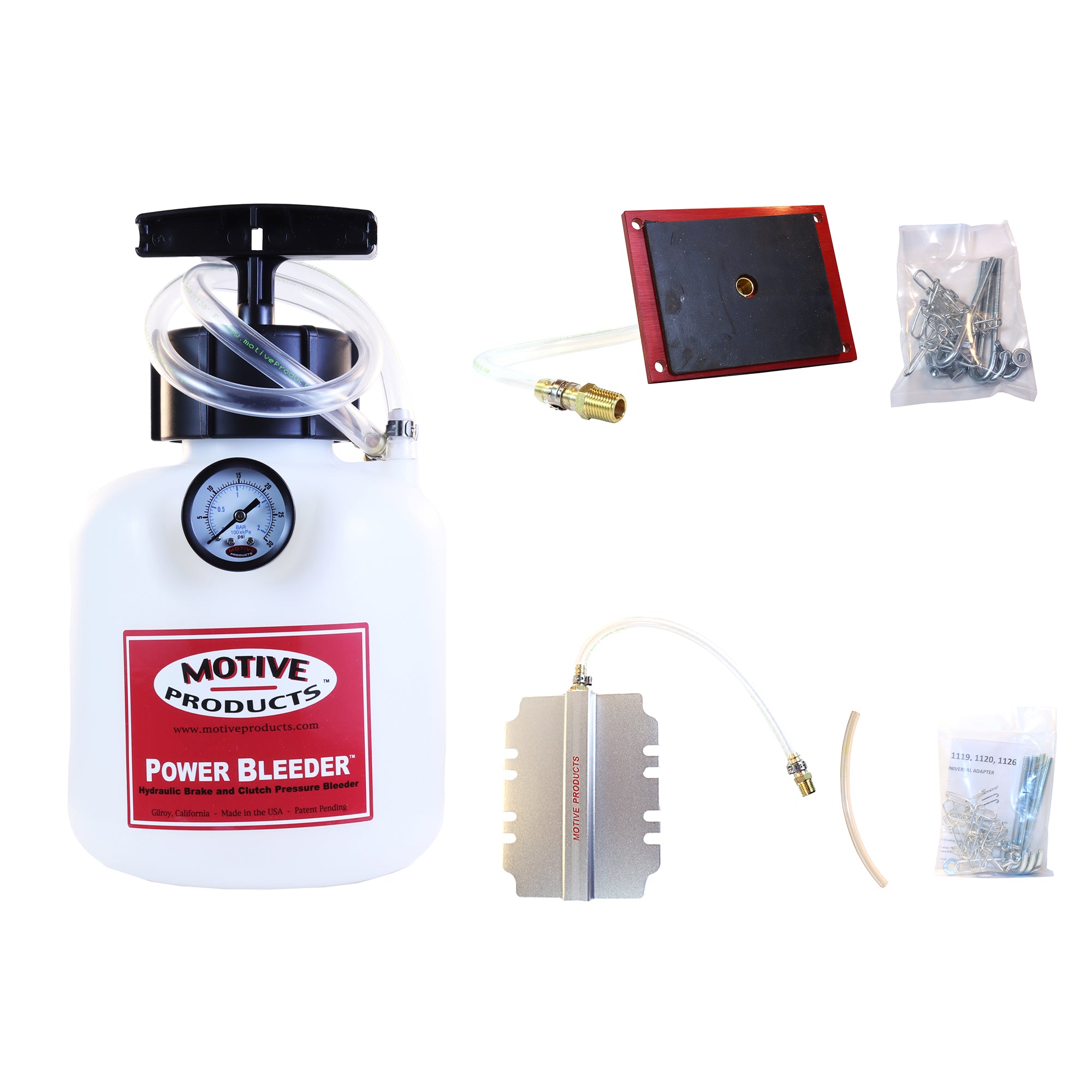
Every Motive kit uses the same 2-quart pressure tank — the difference is the adapter that seals to your master-cylinder cap. Choose one of two ways:
- Vehicle-specific kits — the 0100 European kit fits the 45 mm threaded caps on BMW, Audi, Mercedes, Porsche, VW and Volvo; the 0108 kit covers 1992+ GM trucks and cars; and the 0105 kit handles mid-'60s to early-'80s American dual-reservoir masters.
- Universal kits — the 0250 Universal kit includes multiple adapters covering European, domestic, and import cap profiles, ideal for shops and multi-car households.
Not sure which cap your vehicle uses? Check the Application Guide or browse all adapters to match your reservoir before ordering.
How Often Should You Bleed or Flush Your Brakes?
Most manufacturers recommend a full brake fluid flush every 2 years, regardless of mileage, because glycol-based fluid absorbs moisture from the air over time. Track and performance drivers should flush before every event — water-contaminated fluid boils under repeated hard braking and causes a soft or sinking pedal. Not sure where your fluid stands? Check it in ten seconds with the 5101 Brake Fluid Tester before you decide to flush.
Signs Your Brakes Need Bleeding
Bleed or flush the system if you notice any of these:
- Soft or spongy pedal — air in the lines compresses where fluid can't.
- Pedal sinks to the floor under steady pressure — air or moisture-boiled fluid.
- Brakes feel different after service — any time a line, caliper, or bleeder screw is opened, that circuit needs bleeding afterward.
- Fluid is dark or tests 3%+ water — overdue for a flush.
Any of the above means it's time to connect a one-person power bleeder and push fresh fluid through until the pedal is firm.
Why Pressure Bleeding Beats the Two-Person Method
Pedal bleeding needs a second set of hands and risks pulling air back into the lines every time the pedal releases. A Motive Power Bleeder holds the system at a steady 15–20 psi, pushing fresh fluid from the tank through the master cylinder to each caliper so air and contaminated fluid exit in one continuous, controlled pass. It's the same method factory service manuals specify for many ABS-equipped vehicles — read the full procedure in our Power Bleeder instructions.
Pressure Bleeder vs. Vacuum Bleeder
Call it a brake bleeding kit, a pressure brake bleeder, or a brake bleeder tool — there are really two designs. A pressure bleeder like the Power Bleeder pushes fresh fluid from a sealed tank down through the master cylinder, so air exits at each caliper in one continuous pass and the reservoir can never run dry. A vacuum bleeder pulls fluid out at the bleed screw instead, which often draws air past the screw threads and shows false bubbles — and it can't do a full flush from the reservoir down. For one-person brake bleeding, ABS systems, and complete fluid changes, pressure bleeding is the method factory manuals specify.
Brake Bleeder Kit FAQ
Which brake bleeder kit fits my car?
Match the adapter to your master-cylinder cap: 45 mm threaded caps on most European cars (0100 kit), late-model GM threaded caps (0108 kit), classic rectangular dual-reservoir masters (0105 kit), or choose the 0250 Universal kit with multiple adapters. The Application Guide lists fitment by make and model.
Can one person really bleed brakes with these kits?
Yes. The pressurized tank keeps the master cylinder supplied with fresh fluid while you open each bleed screw, so no one needs to pump the pedal. Most vehicles can be fully flushed in 15–30 minutes.
What pressure should I use?
15–20 psi is sufficient for nearly all vehicles. The built-in gauge lets you monitor pressure the whole time, and the tank holds pressure while you work around the car.
What's the difference between a pressure bleeder and a vacuum bleeder?
A pressure bleeder pushes fluid from the master-cylinder reservoir out through each caliper — one continuous pass, no false air, full flush. A vacuum bleeder sucks fluid from the bleed screw and frequently pulls air past the threads, making it hard to tell when the line is truly clear.
Do Motive kits work with DOT 3, DOT 4, and DOT 5.1 fluid?
Yes — tanks and seals are chemical-resistant and rated for all glycol-based fluids (DOT 3, DOT 4, DOT 5.1). Silicone DOT 5 fluid can also be used, but never mix fluid types in one system.
Can I also bleed a hydraulic clutch?
Yes. Most hydraulic clutches share the brake fluid reservoir, so the same kit and adapter bleed the clutch slave cylinder exactly like a brake caliper.
Brake Bleeder Kits by Vehicle Type
Match your build to the right kit and adapters:
- European (BMW, Audi, Mercedes, Porsche, VW, Volvo) — 0100 European Power Bleeder
- Late-model GM (1992+ Chevy, GMC, Cadillac, Buick) — 0108 GM Power Bleeder
- Classic American (mid-'60s to early-'80s) — 0105 Early American Bleeder
- Shops & multi-car garages — 0250 Universal Kit
- Motorcycles — Motorcycle Brake Bleeders
- Boat & utility trailers — Marine Bleeders & Extractors
Need just a part? Browse all adapters or stainless bleeder screws.